
Myth Check: Lightning Never Strikes the Same Place Twice Is False
NOAA lists the saying as a myth. Lightning strikes tall, pointy and isolated objects again and again, and the Empire State Building is hit about 25 times a year.
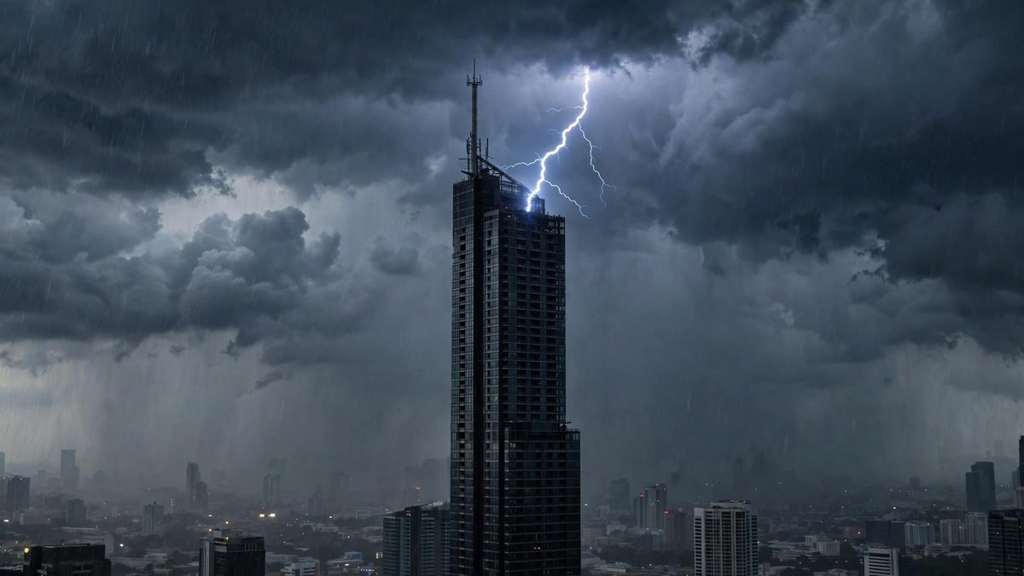
Key points
- The answer is up front: the saying is false.
- NOAA gives the standard example.
- Lightning is an electrical discharge looking for the easiest path between a charged cloud and the ground.
The answer is up front: the saying is false. Lightning can strike the same place twice, and it often strikes the same place dozens of times a year. The National Oceanic and Atmospheric Administration, NOAA, lists the claim word for word in its lightning myths page and marks it not true.
The building that gets hit about 25 times a year
NOAA gives the standard example. The Empire State Building in New York is hit about 25 times per year. NASA's Scientific Visualization Studio, summarizing the same NOAA figures, puts the count at about 23 times a year. The exact yearly number moves with the weather. The point holds either way: one famous address takes hit after hit, year after year, because nothing about a first strike protects it from the next one. The building is designed for this. Its spire and grounding carry the charge safely into the earth, which is why repeated strikes are a maintenance fact there and not a disaster.
Why lightning goes back to the same spot
Lightning is an electrical discharge looking for the easiest path between a charged cloud and the ground. Height shortens that path. A tall, pointy and isolated object reaches closer to the cloud and concentrates the electric field at its tip. After a strike, nothing about the object changes. It is still the tallest and pointiest thing around, so the next storm faces the same geometry and makes the same choice. Lightning has no memory and needs none. The conditions repeat, so the result repeats. One storm can even send several strikes down the same channel within seconds, which high speed photography of tall towers has long shown.
Where the saying probably came from
The phrase works as comfort. People use it to mean that bad luck will not visit the same person twice, and as a weather claim it sounds plausible if you only watch small places. A house or a field may go a lifetime without a hit, which makes a strike feel like a once only event. Zoom out to the tallest structure in a large city and the statistics flip. Repeat strikes are not rare exceptions. They are the normal behavior of lightning wherever the landscape offers one clear favorite target.
The safety facts that travel with the myth
NOAA pairs the myth with others that carry real risk. Lightning can strike far from the center of a storm, even where it is not raining overhead, so hearing thunder means the threat is already close enough to matter. A person who has been struck does not carry a charge and can be touched and given first aid at once. Crouching outdoors does not make a person safe; moving toward proper shelter does. The hard shell of a car protects through its metal frame and roof, not through its rubber tires. Each of these points follows the same physics as the main myth: lightning follows paths and conductors, not sayings and not luck.
So keep the phrase as a figure of speech if you like it. Just do not use it as a forecast. If you stand next to the tallest point in an open field during two storms in a row, lightning is entirely willing to find the same place twice.