
Climate Change Beat El Nino in Strengthening Record Hurricane Polo, Study Finds
A joint study published Oct 15 found warming added about 6 mph to Hurricane Polo, more than El Nino did, and made the conditions behind the record Category 5 storm 23 times more likely.
Key points
- Climate change did more than El Nino to strengthen Hurricane Polo, the longest lasting Category 5 storm ever recorded in the Pacific, according to a joint study published on Thursday, Oct 15, 2026…
- The two science teams split the blame with numbers.
- The conditions that fed Polo were far more likely because of both forces.
Climate change did more than El Nino to strengthen Hurricane Polo, the longest lasting Category 5 storm ever recorded in the Pacific, according to a joint study published on Thursday, Oct 15, 2026 by World Weather Attribution and Climate Central.
The two science teams split the blame with numbers. Warming from the burning of coal, oil and gas added about 6 miles per hour, nearly 10 kilometres per hour, to the storm's strength. El Nino, the natural warming of parts of the Pacific, added a bit less, about 5 miles per hour, or 8 kilometres per hour, a study co-author told the Associated Press.
The conditions that fed Polo were far more likely because of both forces. The study found that climate change made those conditions 23 times more likely, while El Nino made them 14 times more likely. The fuel was ocean water at 88 degrees Fahrenheit, 31.2 degrees Celsius, as much as 3.6 degrees Fahrenheit, or 2 degrees Celsius, warmer than normal.
A record storm in September 2026
Polo exploded in strength in September 2026, rising from a tropical storm to a Category 5 hurricane in about 24 hours. It then held Category 5 strength for two and a half days, a Pacific record for time spent at the top category.
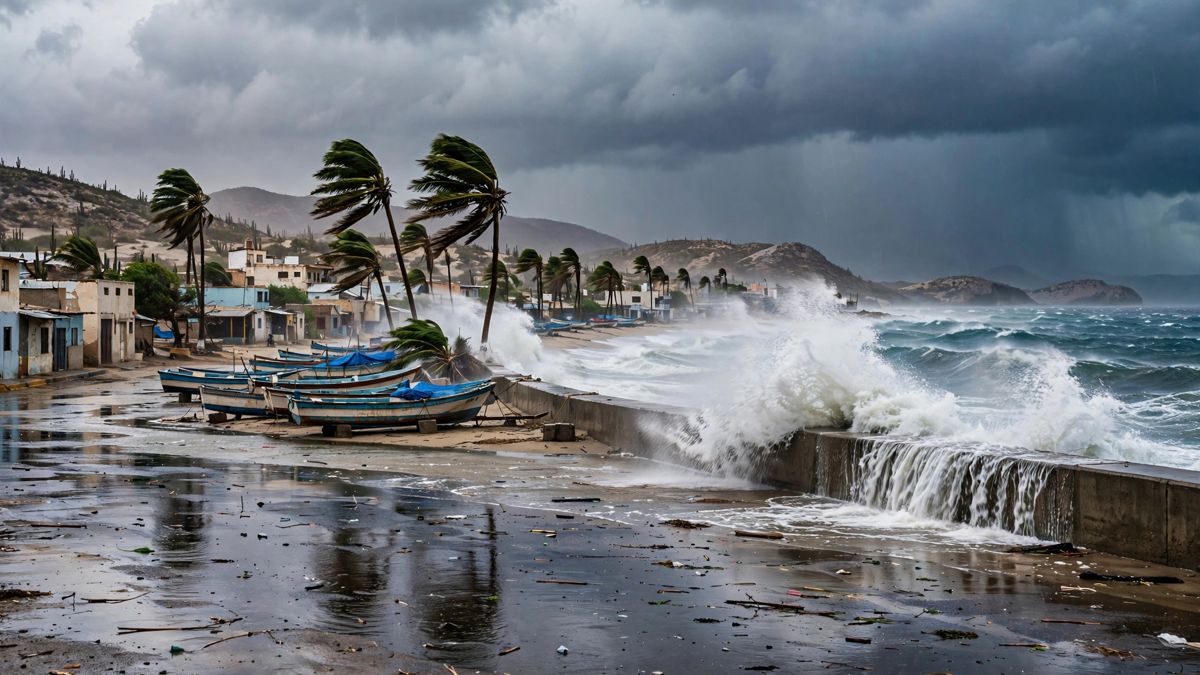
The storm reached the coast of Baja California Sur, Mexico. On Sep 28, 2026, water brought by Polo covered streets next to the beach in Puerto San Carlos, and residents waded through it as the storm passed.
This year has set records for the strength and length of Pacific storms, the study team noted, in a season shaped by a very strong El Nino.
Why the split matters
Study co-author Friederike Otto, who leads the World Weather Attribution team, made the long term point in comments reported by AP. El Nino comes and goes. Warming does not. In her assessment, every hurricane that now forms in the east Pacific carries at least this added climate signal, and that signal grows as long as fossil fuels keep burning.
The researchers also kept the finding in proportion. Without climate change and without El Nino, Polo would still have been a very strong storm. Their point is narrower and harder to dismiss. Extra wind speed raises damage fast, so a few added miles per hour can mean far worse losses when a storm like Polo reaches land.
For coastal Mexico, the study lands while another Pacific storm is in the news. Hurricane Trudy formed off the Mexican coast this week and is forecast to reach major strength by Friday. The Polo findings do not describe Trudy. They do describe the warmer water that Pacific storms now draw on, season after season.
Timeline
- September 2026Hurricane Polo spends a record two and a half days at Category 5 strength in the Pacific.
- Sep 28, 2026Water brought by Polo covers streets in Puerto San Carlos, Baja California Sur.
- Oct 15, 2026World Weather Attribution and Climate Central publish their joint study on what strengthened Polo.
Sources
- Associated Press via Business Mirror: Study says global warming did more than El Nino to turbocharge Hurricane Polo
- Euronews via IndexBox: Climate Change and El Nino Intensified Hurricane Polo, Study Finds
- Associated Press via The Herald Review: Study says global warming did more than El Nino to turbocharge Hurricane Polo