
France Student Protests: 214 Schools Closed as Thunberg Joins March
High school protests over crowded classes and missing teachers entered another nationwide day on Tuesday. The education ministry said 214 schools were closed, and Paris police counted 41,500 marchers.
Key points
- Thousands of people marched through Paris on Tuesday as France's high school protest movement, now in its third week, held another nationwide day of action.
- The education ministry said 214 schools were closed on Tuesday, most of them high schools, out of 3,700 nationwide.
- The protests began on September 18 in Creteil, a suburb of Paris, and spread over teacher shortages, classes of 32 to 35 pupils, long timetables, run down buildings, and classrooms that reached 40…
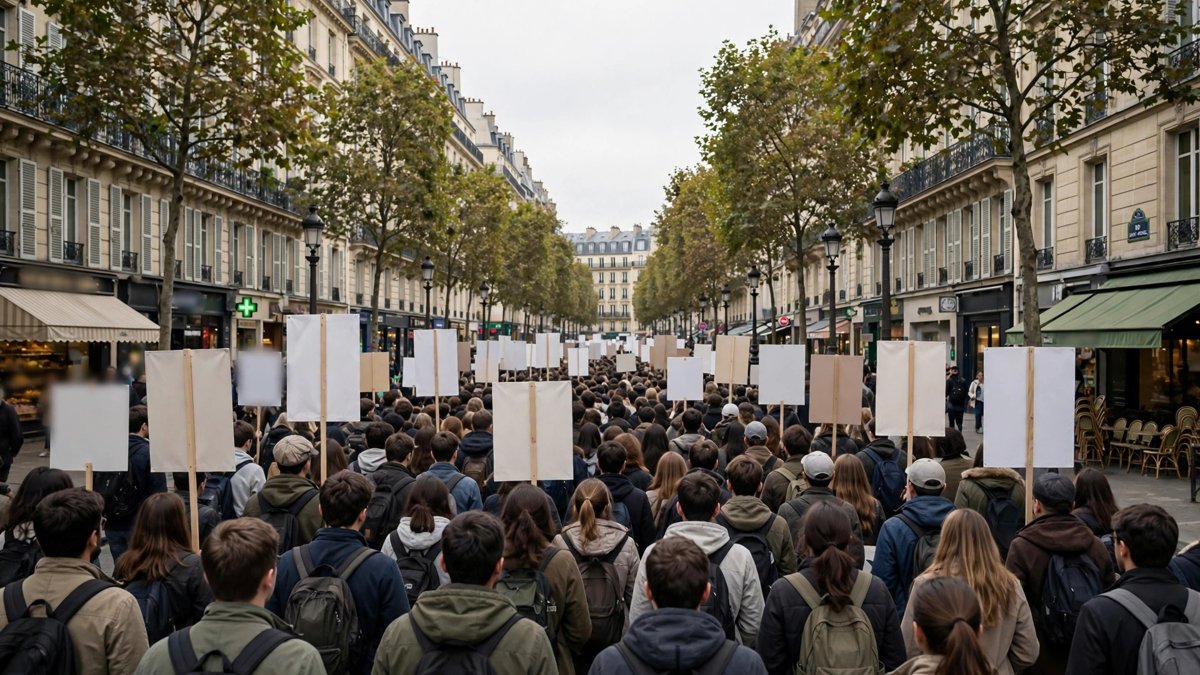
Thousands of people marched through Paris on Tuesday as France's high school protest movement, now in its third week, held another nationwide day of action. Greta Thunberg joined pupils outside a school in Saint Denis, the capital's largest suburb.
The education ministry said 214 schools were closed on Tuesday, most of them high schools, out of 3,700 nationwide. The student union l'Union Etudiante said 90 percent of universities had closed in support. The ministry of higher education put disruption at 35 percent of institutions. In Paris, police counted 41,500 people marching in two groups that converged on Place des Invalides. Prefectures counted 11,000 in Lyon, 7,300 in Rennes and 3,800 in Marseille.
What the students want
The protests began on September 18 in Creteil, a suburb of Paris, and spread over teacher shortages, classes of 32 to 35 pupils, long timetables, run down buildings, and classrooms that reached 40 degrees Celsius during this year's heatwaves. Students also want the Parcoursup university admissions platform scrapped.
Jean Luc Melenchon, the France Unbowed presidential candidate, marched in Paris. The movement has drawn backing from university students, teachers, unions and parents.
A harder edge
The ministry said the number of closures is falling but the violence is intensifying. Lyon's march ended early after clashes involving around a hundred people, and a union banner was torn down. Earlier in the movement, the interior ministry reported 1,949 arrests on October 1 alone, and unions estimated 450,000 people took part nationwide on October 6, against a government figure of 250,000.
President Emmanuel Macron has said the pupils' grievances deserve time and discussion, and urged restraint. His government hopes the movement fades when half term holidays start at the end of this week.
Why it matters
The protests land six months before elections to replace Macron, and in the middle of a budget fight. Prime Minister Sebastien Lecornu is trying to pass a spending restraint budget that cuts the deficit to 5 percent of output in 2027. A bigger education budget is the students' core demand, and the money is the one thing the government says it does not have.
What happens next
Students in Marseille said nursing students joined for the first time on Tuesday, a sign the movement is broadening as holidays approach. Organizers have called on university students and Yellow Vest activists to carry the campaign through the break.
Timeline
- Sep 18, 2026Protests begin at a high school in Creteil over teacher shortages and conditions.
- Oct 6, 2026Nationwide mobilisation; unions estimate 450,000 took part, the government 250,000.
- Oct 14, 2026Education ministry reports 214 schools closed as marches fill Paris and other cities.