
Columbus, Ohio: State Supreme Court Limits Drug Dog Sniffs at Traffic Stops in 6 to 1 Ruling
The Ohio Supreme Court ruled Tuesday that officer safety does not justify holding a driver longer so a drug dog can circle a car. The court ordered evidence from a 2019 Meigs County stop suppressed and sent the case back.
Key points
- The Ohio Supreme Court ruled on Tuesday that police cannot hold a driver longer at a traffic stop so a drug dog can circle the car, when the only reason offered is officer safety.
- Chief Justice Sharon L.
- On December 26, 2019, Deputy Tylun Campbell, a K-9 officer, stopped a vehicle in Meigs County for two marked lanes violations.
The Ohio Supreme Court ruled on Tuesday that police cannot hold a driver longer at a traffic stop so a drug dog can circle the car, when the only reason offered is officer safety. In a 6 to 1 decision, the court said a Meigs County sheriff's deputy violated a driver's constitutional rights in a 2019 stop, ordered the evidence from the search suppressed, and sent the case back.
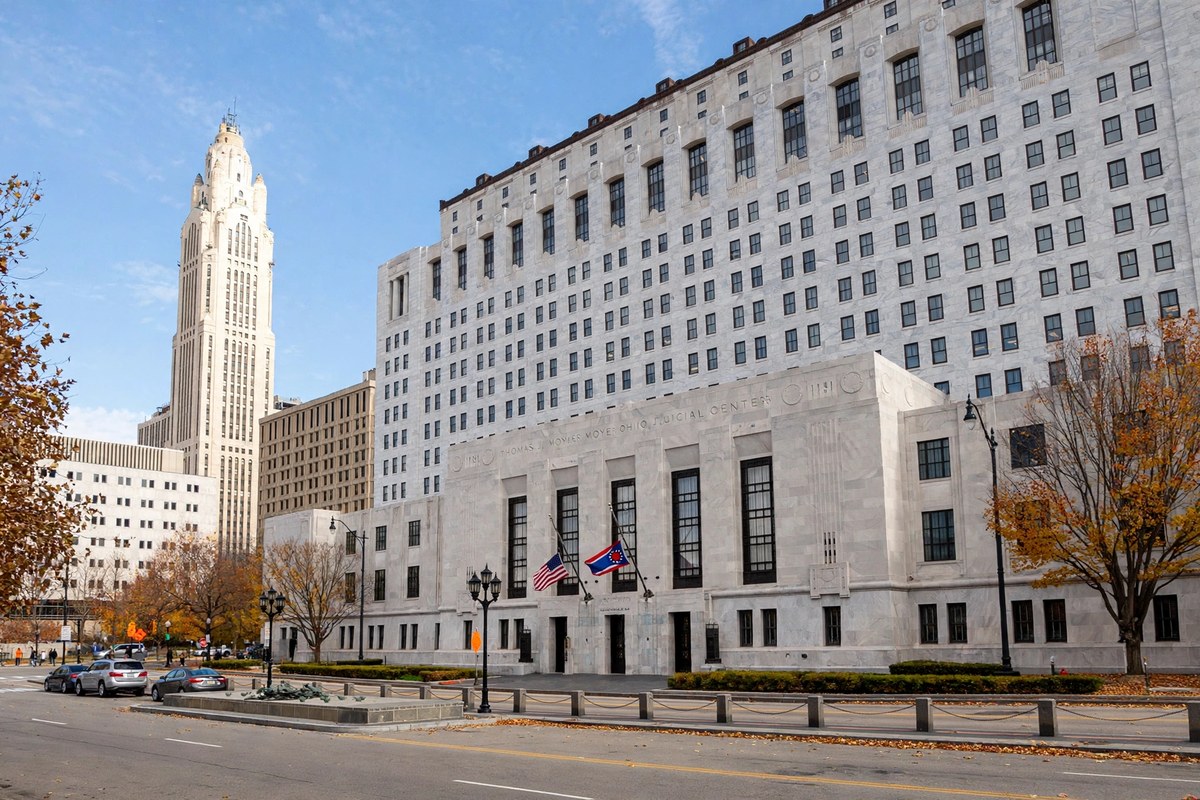
Chief Justice Sharon L. Kennedy, a former police officer, wrote for the majority in State v. Kincaid. "Officer safety does not justify prolonging a stop for a canine sniff since a sniff is not part of a traffic stop's mission," she wrote. The ruling came from the court's home in Columbus and applies to traffic stops across Ohio.
A 2019 stop in Meigs County
On December 26, 2019, Deputy Tylun Campbell, a K-9 officer, stopped a vehicle in Meigs County for two marked lanes violations. Campbell knew the car was registered to John Kincaid and later testified he had prior information that Kincaid was trafficking drugs in the county.
After explaining the reason for the stop, Campbell decided to walk his dog around the car and radioed for another deputy. He waited about five to ten minutes. License checks on Kincaid and a passenger came back clear. When backup arrived, the dog alerted at the driver's side front door, and a search found heroin and fentanyl under the seat, along with cash.
Kincaid asked the Meigs County Common Pleas Court to suppress the evidence. The trial court refused. He pleaded no contest to drug trafficking charges and was sentenced to a prison term of three to four and a half years.
Why the appeals court ruling fell
The Fourth District Court of Appeals agreed that a person's reputation does not give police cause to turn a traffic stop into a drug investigation. But in a 2 to 1 decision, it held that the five to ten minute wait for backup was reasonable for officer safety, and it let the conviction stand.
The Supreme Court overturned that decision. Kennedy wrote that the U.S. Supreme Court's 2015 decision in Rodriguez v. United States does not create an officer safety exception for a sniff. A stop's mission, the majority said, is the traffic violation itself, along with ordinary checks of a license, registration, insurance and warrants. Holding a driver longer to look for other crimes requires reasonable suspicion of criminal activity.
The state also argued, for the first time in the Supreme Court, that Campbell was still finishing routine stop tasks when the dog alerted. The majority said the prosecution had to prove that at the suppression hearing and did not. Campbell did not testify that those tasks were still underway.
What the ruling does and does not do
The ruling does not ban drug dogs at traffic stops. A sniff that runs while an officer is still doing the ordinary work of the stop, and adds no time, can still be lawful. So can a sniff backed by reasonable suspicion of a crime. What officers cannot do, the court held, is use safety alone to keep a driver on the roadside for a dog.
Justice Megan E. Shanahan dissented. She agreed that officer safety alone cannot justify prolonging a stop for a sniff, but she would have inferred that ordinary inquiries were still underway when the dog alerted. Justices Patrick F. Fischer, R. Patrick DeWine, Jennifer Brunner, Joseph T. Deters and Daniel R. Hawkins joined the majority. The case is State v. Kincaid, Slip Opinion No. 2026-Ohio-4510.
Timeline
- Dec 26, 2019Meigs County Deputy Tylun Campbell stops John Kincaid for two marked lanes violations and, after a wait for backup, runs a drug dog around the car. The dog alerts, and a search finds heroin and fentanyl.
- Nov 17, 2026The Ohio Supreme Court rules 6 to 1 in State v. Kincaid that officer safety does not justify prolonging a stop for a canine sniff, orders the evidence suppressed, and remands the case.