
Taurid Fireballs Tonight: New Moon Brings Dark Skies
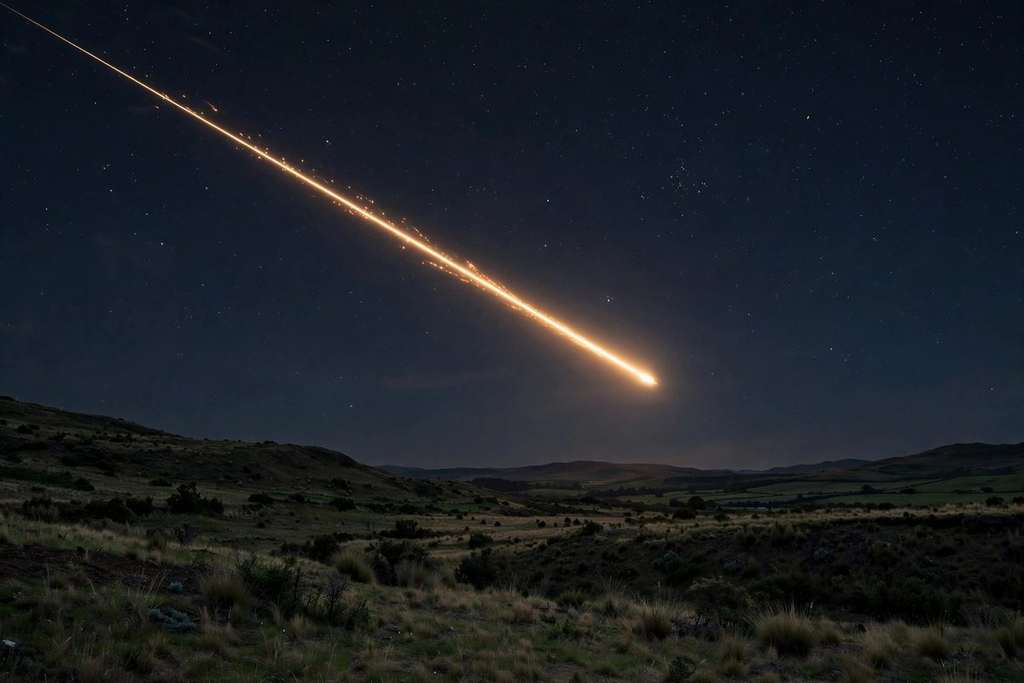
Both Taurid meteor streams are active under a new moon on November 9. The showers are slow and sparse, about five meteors an hour, but they are known for bright fireballs. The Northern Taurids peak on November 11 to 12.
Key points
- Fireballs could cross the sky tonight.
- The Taurids are not a high-count shower.
- Both streams are debris from Comet 2P/Encke, which circles the Sun every 3.3 years.
Fireballs could cross the sky tonight. Both Taurid meteor streams are active at once, and the new moon on November 9 leaves the darkest skies of the whole shower, the condition the Taurids need most.
The Taurids are not a high-count shower. The American Meteor Society puts the rate at about five meteors an hour under ideal dark skies. What sets them apart is brightness. The society notes that the Taurids are rich in fireballs, the name for very bright meteors, and that fireball reports rise from September through November.
Two streams, one comet
Both streams are debris from Comet 2P/Encke, which circles the Sun every 3.3 years. The stream carries a high share of larger, pebble-sized pieces, and larger pieces are what burn up as fireballs.
The Southern Taurids run from September 20 to November 20 and reached their main peak on the night of November 4 to 5. The Northern Taurids run from October 20 to December 10 and peak on the night of November 11 to 12, according to the American Meteor Society calendar. The International Meteor Organization's 2026 calendar gives the same broad picture, with the Southern maximum around November 5 and the Northern maximum around November 12.
The meteors are slow by meteor standards. The IMO puts the Southern Taurids at 27 kilometres per second and the Northern Taurids at 29, which is part of why their fireballs can seem to glide across the sky.
When and how to watch
The new moon fell on November 9 at 07:02 UTC, so moonlight will barely interfere this week. The best window tonight is roughly 9 p.m. to 2 a.m. local time. Taurus, the constellation the meteors appear to come from, rises in the east during the evening and climbs to its highest point around midnight.
There is no need to stare at Taurus. Meteors can appear anywhere in the sky, and a wide view under a dark sky works better than a fixed gaze. Clear weather and distance from city lights decide more than anything else.
One honest limit: 2026 is not a Taurid swarm year. The American Meteor Society's guidance lists no special swarm for this year. The last swarm year was 2025, and the next is predicted for 2032. Fireballs are still likely on a dark night like tonight, but no one can promise one on a given night.
Timeline
- Nov 5, 2026The Southern Taurids reached their main peak on the night of November 4 to 5.
- Nov 9, 2026New moon at 07:02 UTC leaves the darkest skies of the Taurid season, with both streams active.
- Nov 11, 2026The Northern Taurids peak on the night of November 11 to 12.