
SpaceX Bandwagon-5 Launches 32 Payloads and Lights Dawn Sky
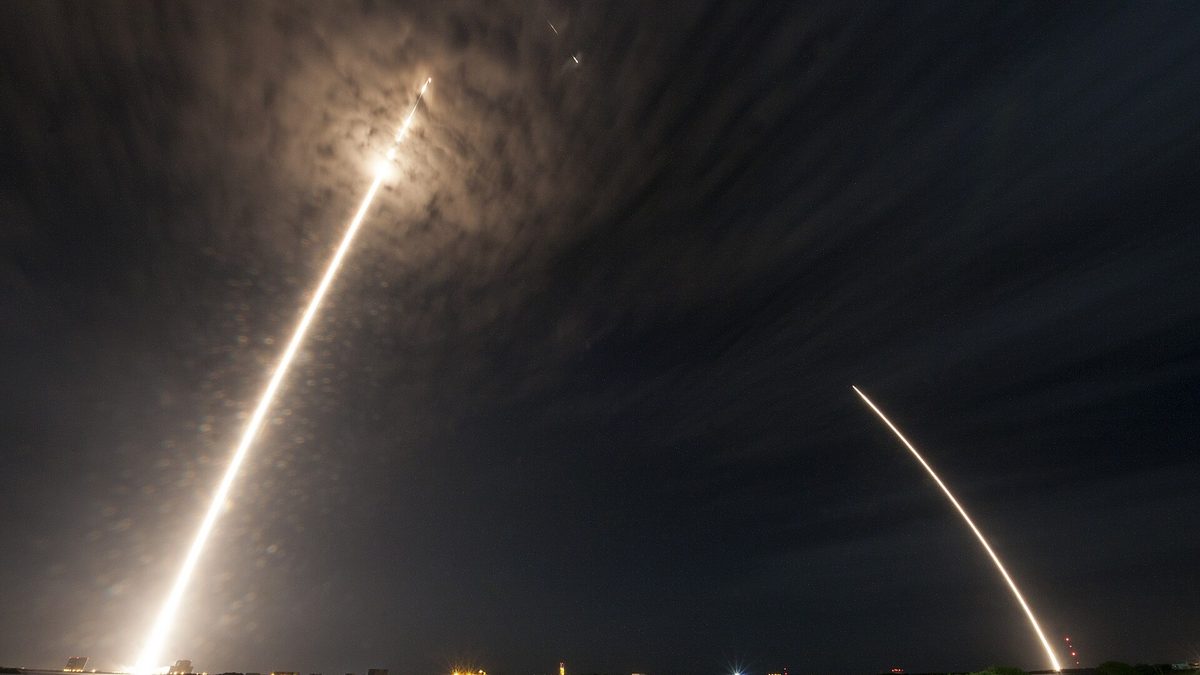
A Falcon 9 carried 32 small satellites from Cape Canaveral at dawn on Oct. 20, and sunlight on its exhaust created the glowing jellyfish seen across the East.
Key points
- A SpaceX Falcon 9 lifted off at 7:04 a.m. ET on Tuesday, Oct. 20, 2026, from Cape Canaveral Space Force Station in Florida and turned the dawn sky into a glowing plume that people across the…
- The flight was Bandwagon-5, a rideshare mission that deployed 32 payloads into orbit.
- The first-stage booster, flying its 19th mission, came back less than nine minutes after liftoff and landed on the drone ship A Shortfall of Gravitas in the Atlantic.
A SpaceX Falcon 9 lifted off at 7:04 a.m. ET on Tuesday, Oct. 20, 2026, from Cape Canaveral Space Force Station in Florida and turned the dawn sky into a glowing plume that people across the eastern United States could see.
The flight was Bandwagon-5, a rideshare mission that deployed 32 payloads into orbit. The cargo included cubesats and microsats from a range of companies and organizations, each buying a place on the same rocket instead of paying for a launch of its own.
The first-stage booster, flying its 19th mission, came back less than nine minutes after liftoff and landed on the drone ship A Shortfall of Gravitas in the Atlantic. The launch was the 60th orbital launch of 2026 from Cape Canaveral and Kennedy Space Center combined.
Why the sky glowed
The mission launched shortly before sunrise. On the ground, the light was still dim. High above Florida, sunlight already reached the rocket exhaust. That contrast made the plume glow and spread, a shape observers call a space jellyfish.
The effect happens only when timing lines up: a launch near darkness, clear skies, and sunlit exhaust at high altitude. Tuesday met all three conditions.
Monday's attempt was scrubbed because of weather in the booster recovery zone. A booster landing at sea needs conditions that allow the drone ship to hold position and crews to work safely, even when the launch site itself looks calm.
Small satellites, routine business
Bandwagon flights show how the launch business has changed. Small satellite operators once waited years for a spare slot or paid for a dedicated rocket they could not fill. Rideshare missions group dozens of payloads together, split the cost, and fly on a set schedule.
Exolaunch said it would deploy 23 payloads from this mission. The company also said it has signed agreements for two future dedicated SpaceX missions, Exo-1 in 2027 and Exo-2 in 2028.
The mission also carried a Starfall reentry capsule demonstration. Reentry tests matter because operators want hardware and data returned from orbit, not only sent up. A capsule that survives the trip back gives companies a way to test materials and products in space and bring them home for inspection.
What happens next
For SpaceX, the number that stands out is cadence. Sixty orbital launches from the Florida coast by Oct. 20 shows a pace that was rare a decade ago. Reuse helps hold that pace. A booster on its 19th flight spreads its build cost across many missions and cuts the need for a new first stage each time.
On Tuesday, though, most people who saw the launch will remember the light first. A rocket left Florida in the dark, caught the sun high above the coast, and drew a bright jellyfish over the morning sky while delivering 32 payloads to orbit on schedule.
Timeline
- Oct 19, 2026Monday launch attempt is scrubbed because of weather in the booster recovery zone.
- Oct 20, 2026Falcon 9 lifts off at 7:04 a.m. ET on Bandwagon-5, deploys 32 payloads, and the booster lands on A Shortfall of Gravitas.