
Portland, Oregon: City Council Orders 20 Percent Fuel Storage Cut at Willamette River Hub by 2036
The council voted unanimously on November 12 to require the bulk fuel terminals at the Critical Energy Infrastructure Hub to cut tank capacity by at least 20 percent by 2036, citing the risk of spills and fires in a major earthquake.
Key points
- The Portland City Council voted unanimously on Thursday, November 12, to order a drawdown of the fuel stored along the Willamette River in northwest Portland.
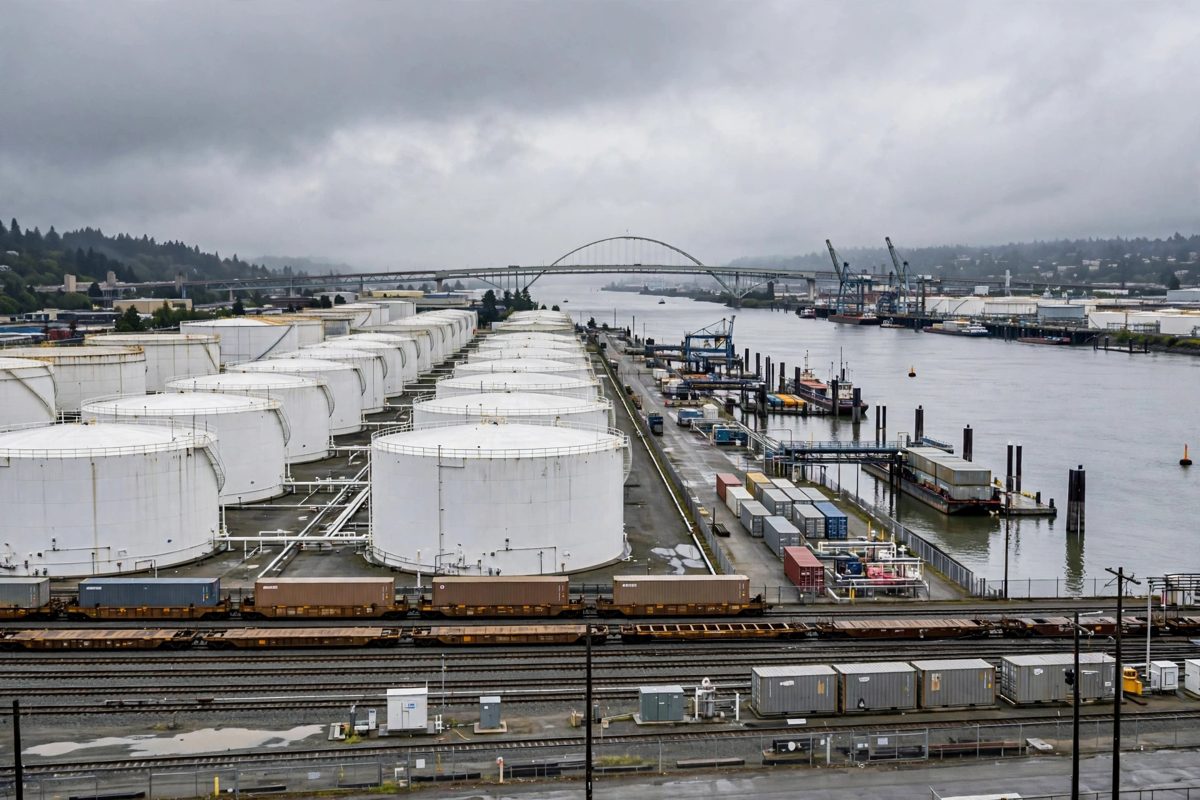
- The CEI Hub is a six mile stretch of industrial land along the Willamette River, running between the Fremont Bridge and Sauvie Island.
- The goal is to cut the risk of catastrophic spills and fires if a major Cascadia Subduction Zone earthquake strikes the region, KXL reported.
The Portland City Council voted unanimously on Thursday, November 12, to order a drawdown of the fuel stored along the Willamette River in northwest Portland. Two ordinances adopted that day require the terminals at the Critical Energy Infrastructure Hub, known as the CEI Hub, to reduce their bulk fuel storage capacity by at least 20 percent by 2036.
The hub holds most of Oregon's fuel
The CEI Hub is a six mile stretch of industrial land along the Willamette River, running between the Fremont Bridge and Sauvie Island. The city says the hub stores 90 percent of Oregon's liquid fuel supply. KXL reported that 11 bulk fuel terminals operate at the site, in aging tanks.
The goal is to cut the risk of catastrophic spills and fires if a major Cascadia Subduction Zone earthquake strikes the region, KXL reported. City cited studies show the area is vulnerable to earthquakes, and a large quake could rupture tanks and send fuel into the river.
What the ordinances do
One ordinance amends the city's Comprehensive Plan and its zoning and building codes to support public health and natural hazards risk reduction at the hub. It further limits expansion of tank capacity for all fuel types, limits expansion of transloading infrastructure, and adds a neighborhood contact requirement when terminals alter tanks or transloading equipment.
The second ordinance adds Title 17 regulations that carry the drawdown itself. Terminals must report their fuel inventories to the city every year, and they must cut bulk fuel storage capacity by at least 20 percent by 2036. Aviation fuel storage is the exception to the cut, and the package allows aviation fuel capacity to expand by up to five percent. The package also directs more Portland Clean Energy Fund money toward alternative transportation, KXL reported.
A decade of argument
The city has restricted new fossil fuel storage and expansion at the hub since 2016, and the question of the fuel already stored there has been debated for years. Before the vote, the council held a public hearing on September 24, further meetings on October 1 and October 7, and considered more than 280 pieces of testimony, the city said.
Councilor Elana Pirtl-Guiney said the legislation is not perfect but called it a good start. "The real solution here is ultimately moving storage to a place that is not the least safe place in our state to store this fuel," she said, in KXL's account of the meeting.
The count nobody has
Supporters of a stronger drawdown call the capacity cut a first step, because no one knows exactly how much fuel sits in the tanks on a given day. A 2022 Multnomah County report estimated active tanks at the hub at about 333 million gallons of total capacity, holding about 234 million gallons on average, roughly two thirds full. The ordinance also requires the city administrator to recommend an alternative approach by June 2027, so a future council can base reductions on actual stored volume rather than tank capacity alone.
"We need to know how much fuel is actually there to reduce it. If there's less fuel, there's less risk," Portland activist Nikki Mandell said, in reporting by Focal News ahead of the vote.
State energy officials have urged caution about cutting too deep. The Oregon Department of Energy has modeled a 70 percent decline in statewide fuel consumption by 2050, but its assistant director Maxwell Woods told The Oregonian/OregonLive that forecasting fuel needs 10 or 20 years out is not reliable, and officials say large storage acts as a buffer in an emergency.
Timeline
- 2016Portland begins restricting new fossil fuel storage and expansion at the Critical Energy Infrastructure Hub.
- Sep 24, 2026City Council holds a public hearing on the CEI Hub package, with further meetings on Oct 1 and Oct 7 and more than 280 pieces of testimony considered.
- Nov 12, 2026City Council unanimously adopts both ordinances, ordering a cut of at least 20 percent in bulk fuel storage capacity by 2036.
- June 2027Deadline in the ordinance for the city administrator to recommend an alternative approach based on the volume of fuel actually stored.
- 2036Deadline for terminals at the hub to complete the cut of at least 20 percent in bulk fuel storage capacity.
Sources
- City of Portland: Portland City Council adopts two ordinances to support safety and reduce fuel storage at the Critical Energy Infrastructure Hub
- KXL: Portland City Council Mandates Fuel Storage Reduction At Willamette River Facility
- Focal News: Portland Council to Vote on 20% Fuel Storage Cut at Earthquake-Prone Willamette Hub