
Delhi AQI Hits Severe at 403: Two Indexes, One Grey Sky
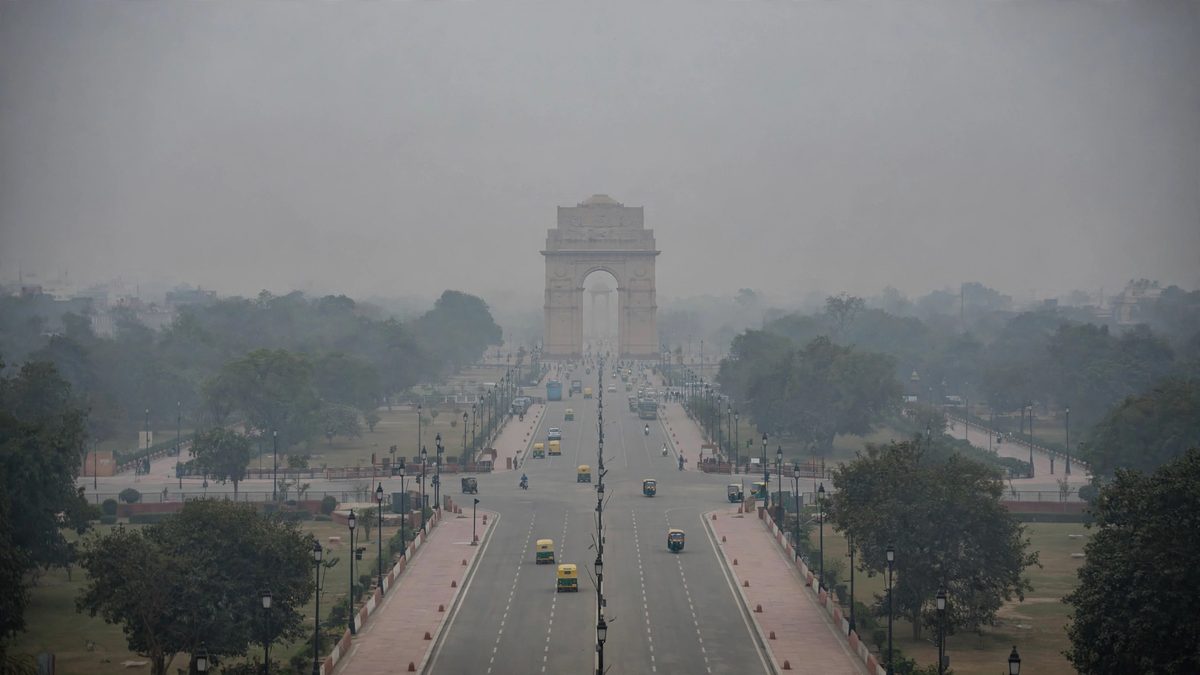
Delhi recorded its first severe air day of the season on Friday, with the CPCB index at 403 in the morning and GRAP Stage III curbs already a week old. Here is what the number means and why foreign rankings show a different one.
Key points
- Delhi woke up on Friday to the worst air of the season.
- Of the 58 monitoring stations reporting at 8 a.m., 33 recorded severe air, 24 recorded very poor air and one recorded moderate air.
- The CPCB scale runs from 0 to 500.
Delhi woke up on Friday to the worst air of the season. The Central Pollution Control Board (CPCB) put the city Air Quality Index at 403 at 6:05 in the morning, and the reading held at 403 at 8 a.m. and 9 a.m. on the board's SAMEER app. A later wire reading put the index at 419 at 8:40 a.m. Both figures sit in the severe band, the first severe reading of the season.
What the numbers say
Of the 58 monitoring stations reporting at 8 a.m., 33 recorded severe air, 24 recorded very poor air and one recorded moderate air. IIT Delhi recorded the highest station reading at 485. Delhi University's north campus recorded 477, Pusa recorded 467 and Jawaharlal Nehru University recorded 449. Noida, across the border in Uttar Pradesh, averaged 474 in the severe band. The day before, Delhi's average AQI was 350, in the very poor band. The city last recorded a severe day on January 19, when the 24-hour average stood at 410.
The CPCB scale runs from 0 to 500. Readings of 0 to 50 are good, 51 to 100 satisfactory, 101 to 200 moderate, 201 to 300 poor, 301 to 400 very poor and 401 to 500 severe. Readers comparing Delhi with world city rankings should know those rankings often use the United States scale, which weights the same particles differently. The same air can carry a lower number on the US scale and a severe label on the Indian scale. Both numbers describe the same sky. Only the ruler changes.
The curbs already in force
The Commission for Air Quality Management invoked Stage III of the Graded Response Action Plan across Delhi and the National Capital Region on November 6, ahead of the worst of the season. Stage III bans dust-heavy construction and demolition work, shuts stone crushers and mining activity, and restricts older vehicles. BS-III petrol and BS-IV diesel light motor vehicles are barred in Delhi and in the high-traffic districts of Gurugram, Faridabad, Sonipat, Ghaziabad and Gautam Buddha Nagar. If the 24-hour average crosses 450, the severe plus band, Stage IV brings the toughest set of restrictions in the plan.
Why it matters
Severe air is not an abstract index for the roughly 30 million people in the capital region. It decides whether children play outside, whether outdoor workers can finish a shift, and whether hospitals fill with breathing cases. Schools and offices across the region plan around the index each winter. Friday's reading arrived while the restrictions meant to prevent it were already a week old, which is why enforcement, not new rules, is the argument in the capital today.
What happens next
The India Meteorological Department expects Delhi's air to stay in the very poor to severe range until November 16. The city's final 24-hour average for Friday is recorded at 4 p.m. That number decides whether officials start talking about Stage IV. For residents, the practical steps stay the same: check the station nearest home before going out, keep outdoor exercise short on severe mornings, and treat the CPCB reading, not a foreign ranking, as the number that governs local rules.
Key numbers
- City AQI: 403 at 6:05 a.m., held through 9 a.m.; 419 in an 8:40 a.m. wire reading
- Stations in the severe band: 33 of 58
- Highest station reading: IIT Delhi, 485
- Previous day average: 350
- GRAP Stage III in force since: November 6
- Stage IV trigger: 24-hour average above 450
- Forecast: very poor to severe until November 16
Timeline
- Nov 6, 2026The Commission for Air Quality Management invokes GRAP Stage III across Delhi and the National Capital Region.
- Nov 12, 2026Delhi's average AQI is 350, in the very poor band.
- Nov 13, 2026CPCB puts Delhi's AQI at 403 at 6:05 a.m., the first severe reading of the season; 33 of 58 stations record severe air.