
Cape Verde Votes as Neves Seeks a Second Term and Rosa Makes History
Polls opened on Sunday in the island nation, where President Jose Maria Neves faces Joana Rosa, the first woman to run for president since independence in 1975, in a vote shaped by emigration and jobs.
Key points
- Voters in Cape Verde began casting ballots on Sunday in a presidential election that pits President Jose Maria Neves against Joana Rosa, the first woman to run for president since the islands…
- The Associated Press reported that more than 300,000 people are eligible to vote.
- Neves, 66, of the African Party for the Independence of Cape Verde (PAICV), is seeking a second term and is tipped as the favourite.
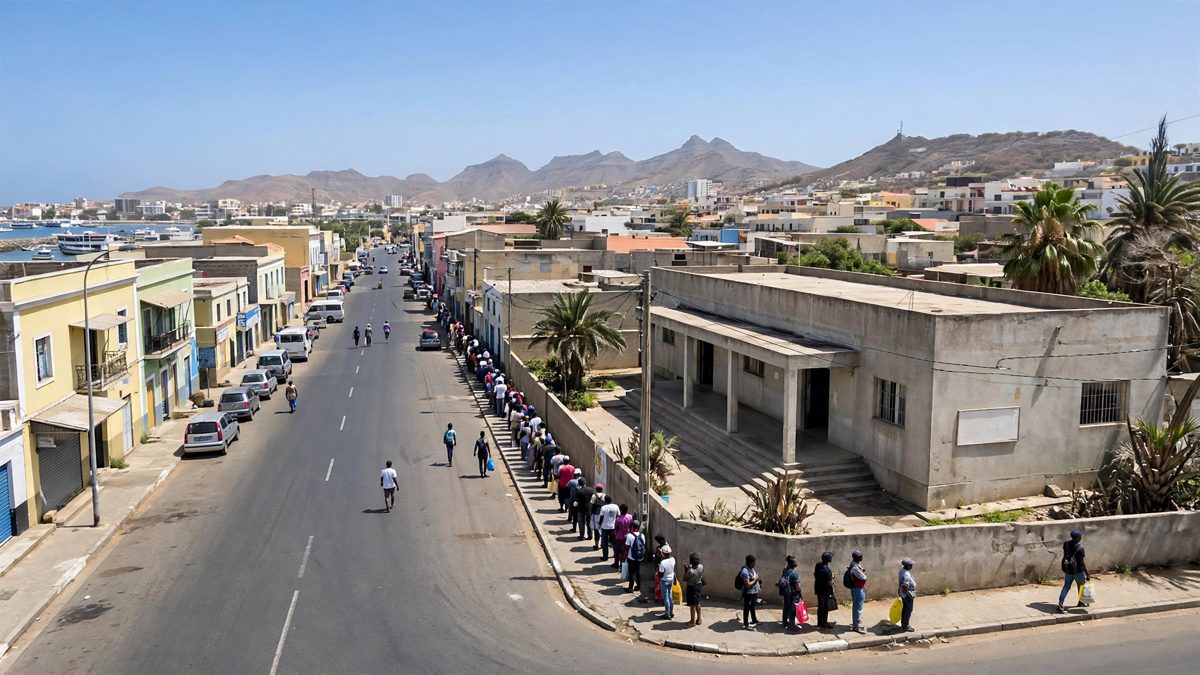
Voters in Cape Verde began casting ballots on Sunday in a presidential election that pits President Jose Maria Neves against Joana Rosa, the first woman to run for president since the islands gained independence from Portugal in 1975. Polls opened at 8 am local time, 09:00 GMT, and close at 6 pm, 19:00 GMT. Six candidates are on the ballot, and a candidate must win more than 50 percent of the vote to win outright.
The Associated Press reported that more than 300,000 people are eligible to vote. The National Elections Commission lists 419,448 registered voters, including 76,383 living abroad. Nearly 77,000 diaspora Cape Verdeans are registered to vote at embassies abroad. The archipelago has about 500,000 residents and more people living in the diaspora than at home, most of them in Portugal and the United States.
The two leading candidates
Neves, 66, of the African Party for the Independence of Cape Verde (PAICV), is seeking a second term and is tipped as the favourite. He served as prime minister for 15 years and became president in 2021. His party won 37 of 72 parliamentary seats in May, which allowed Neves to appoint Francisco Carvalho, then mayor of the capital, Praia, as prime minister.
Rosa, of the Movement for Democracy, is a former justice minister and his strongest challenger. Her party governed for 10 years before the May vote. Cape Verde runs a hybrid parliamentary and presidential system in which the president holds veto authority and a mediating role. The country is known for its stability in a politically unsettled region, and it drew global attention this year when its men's football team reached the World Cup knockout stages.
Emigration at the centre of the vote
Emigration and jobs are central issues in this election. Emigration has long been driven by a shortage of jobs at home. Neves has promised to organise a youth summit on emigration if he is re-elected. Rosa has called for a government that allows young people "to build their futures here at home and prevent the continued exodus of young Cape Verdeans abroad", in remarks reported by the Associated Press.
Many voters still feel distant from the political class. Roselma Evora, a professor of political science and gender studies at the University of Cabo Verde, told the Associated Press that many voters feel politicians do not understand their daily difficulties.
What happens next
If no candidate passes 50 percent, the top two go to a runoff on November 29, 2026. Results are expected within two to three days of Sunday's vote. No result exists yet, and no winner can be called while polls are open.
Timeline
- 1975Cape Verde gains independence from Portugal. No woman has run for president since independence until this election.
- May 2026The PAICV wins 37 of 72 parliamentary seats, and Neves appoints Francisco Carvalho as prime minister.
- Nov 15, 2026Polls open from 8 am to 6 pm local time for the presidential election, with six candidates on the ballot.
- Nov 29, 2026Runoff between the top two candidates, held only if no candidate wins more than 50 percent in the first round.
Sources
- Associated Press via Barbados Gazette: Polls open in Cape Verde in race with first female presidential candidate
- HeadlinesXtra: Cape Verde presidential election, emigration and youth jobs, citing the National Elections Commission
- The Hindu via Chittu: Cape Verde could elect first woman president since gaining independence in 1975