
Bengaluru Metro Crosses 100 km as Pink Line Stretch Opens
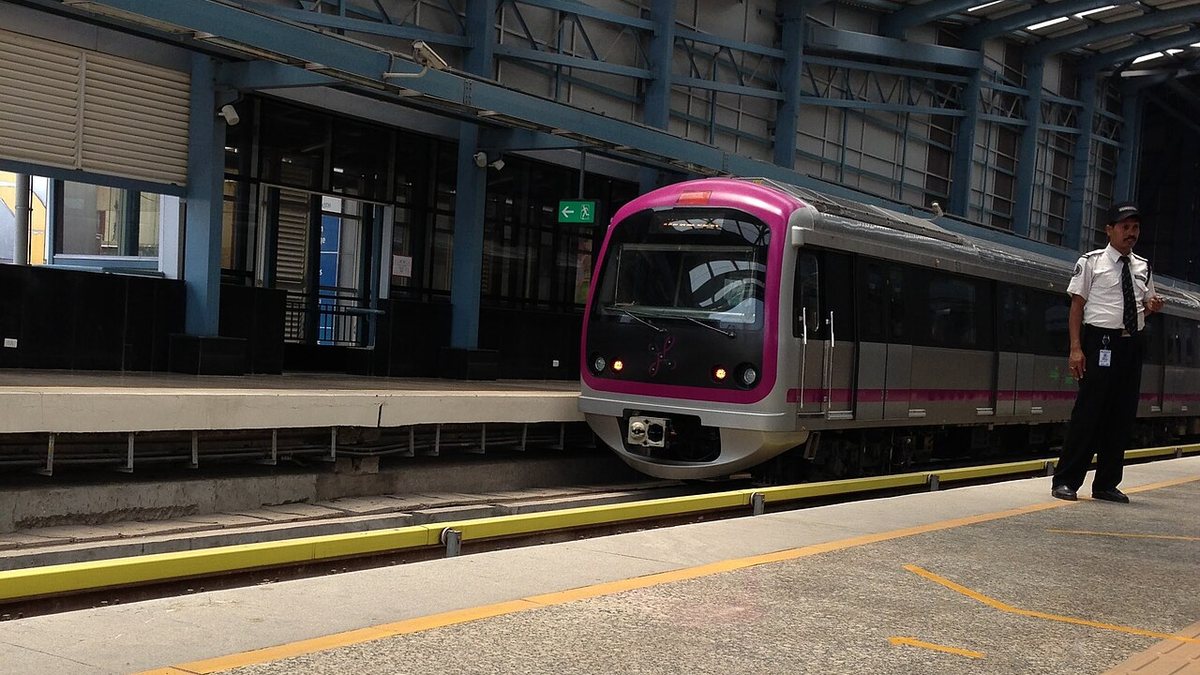
Prime Minister Narendra Modi opened the 7.5 km elevated Pink Line section from Kalena Agrahara to Tavarekere on Friday, November 13, 2026, as Karnataka projects worth more than 15,600 crore rupees were inaugurated, dedicated and launched.
Key points
- Bengaluru's metro network passed 100 kilometres on Friday, November 13, 2026, when Prime Minister Narendra Modi inaugurated the first section of the Pink Line, a 7.5 kilometre elevated stretch…
- Modi flagged off services at Tavarekere station and rode the new line toward the Indian Institute of Management Bangalore, B2B Purchase reported, citing the New Indian Express.
- The new section serves six stations: Kalena Agrahara, Hulimavu, IIMB, JP Nagar 4th Phase, Jayadeva Hospital and Tavarekere, NewKerala reported.
Bengaluru's metro network passed 100 kilometres on Friday, November 13, 2026, when Prime Minister Narendra Modi inaugurated the first section of the Pink Line, a 7.5 kilometre elevated stretch between Kalena Agrahara and Tavarekere in the south of the city. The Hindu BusinessLine reported that the opening takes the operational network run by the Bangalore Metro Rail Corporation past 100 kilometres for the first time.
Modi flagged off services at Tavarekere station and rode the new line toward the Indian Institute of Management Bangalore, B2B Purchase reported, citing the New Indian Express. The stretch cost about 3,470 crore rupees to build.
Six stations on the first Pink Line section
The new section serves six stations: Kalena Agrahara, Hulimavu, IIMB, JP Nagar 4th Phase, Jayadeva Hospital and Tavarekere, NewKerala reported. It is the southern end of a 21 kilometre Pink Line corridor that will run from Kalena Agrahara to Nagawara in the north of the city. The rest of the corridor is an underground section that is still under construction, with a 2027 target reported by NewKerala.
The line gives the neighbourhoods around Bannerghatta Road a direct metro link for the first time. Jayadeva Hospital, one of the largest cardiac care hospitals in the region, and the IIM Bangalore campus both sit on the new section.
Why the 100 kilometre mark matters
Bengaluru is now the third urban region in India with a metro network longer than 100 kilometres, after Delhi and the National Capital Region and the Mumbai Metropolitan Region, The Hindu BusinessLine reported. Modi noted at the event that the city's metro had grown from 17 kilometres in 2014 to more than 100 kilometres, according to reports of his remarks carried by Indian outlets.
The growth has not kept pace with the city's roads. Bengaluru is known across India for slow traffic, and each new metro section is watched as a test of whether rail can pull commuters out of cars on the busiest corridors. The Pink Line runs under and over some of the most congested ground in the south of the city.
One visit, 15,600 crore rupees of projects
The metro opening was the centre of a wider Karnataka programme. Modi inaugurated, dedicated and laid foundation stones for projects worth more than 15,600 crore rupees across urban mobility, power transmission, renewable energy, petroleum infrastructure, waste management and railways, the Press Information Bureau release carried by WebIndia123 said.
In the power sector, he inaugurated the transmission scheme for the integration of renewable energy zones at Koppal-II and Gadag-II, built at a cost of about 4,450 crore rupees, and a solar energy zone transmission scheme at Bidar, built for about 1,370 crore rupees. In Mangaluru, he dedicated an underground LPG storage cavern with a capacity of 80,000 metric tonnes, built at a cost of more than 850 crore rupees and described in the reports as the largest of its kind in the country. He also flagged off a Vande Bharat Express service linking Bengaluru, Mangaluru and Madgaon, Construction Mirror reported, and laid the foundation stone for a GAIL compressed biogas plant at Haralakunte in Bengaluru.
The road to opening day
The final Commissioner of Metro Railway Safety inspection of the new section was completed on October 8, 2026, and the safety clearance followed on October 28, NewKerala reported. The inspection is the last formal step before passenger services can begin on a new metro section in India.
What happens next
Work continues on the underground section of the Pink Line toward Nagawara. When the full 21 kilometre corridor opens, the line will cross the city from south to north and connect with the existing Purple and Green lines. For riders in the south, the change starts now: six stations, a shorter trip to the city centre, and a network that has passed a round number its planners have chased for a decade.
Timeline
- Oct 8, 2026The final Commissioner of Metro Railway Safety inspection of the Pink Line elevated section is completed, the last formal step before passenger services can begin.
- Oct 28, 2026The metro safety clearance for the new section is announced.
- Nov 13, 2026Prime Minister Narendra Modi inaugurates the 7.5 km Kalena Agrahara to Tavarekere section, and Bengaluru's operational metro network passes 100 km.
Sources
- The Hindu BusinessLine: Bengaluru Metro crosses 100 km as Modi opens Pink Line stretch
- Construction Mirror: PM Modi launches infrastructure projects worth 15,600 crore rupees in Karnataka, inaugurates Namma Metro Pink Line
- NewKerala: PM Modi inaugurates Namma Metro Pink Line in Bengaluru
- Press Information Bureau release carried by WebIndia123: PM Modi to inaugurate Bengaluru Metro Pink Line on Nov 13