
ANC Vote Falls Sharply as South Africa Faces Hung Councils
With 36 percent counted, the ANC stood near 32 percent, about 14 points below 2021, and the DA led Johannesburg. No party looks set for a majority there, so coalition talks will decide who runs major cities.
Key points
- South Africa counted votes on Thursday after local elections on Wednesday, November 4, 2026, and the early numbers pointed to a sharp fall for the African National Congress and hung councils in…
- That ANC share is about 14 percentage points below its 2021 municipal result, which was already its worst in history.
- Voters chose 10,526 council seats across 257 councils.
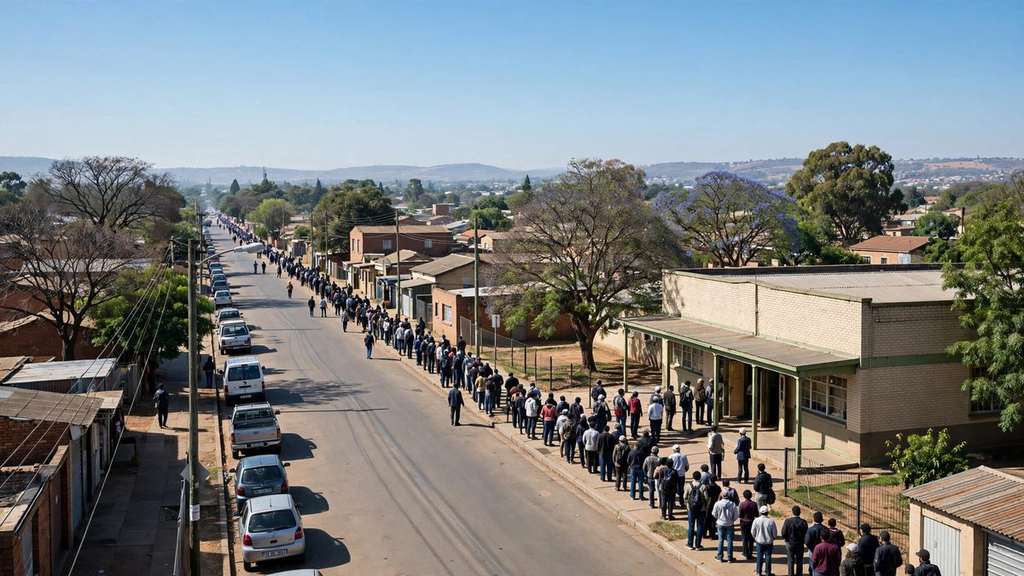
South Africa counted votes on Thursday after local elections on Wednesday, November 4, 2026, and the early numbers pointed to a sharp fall for the African National Congress and hung councils in major cities. With 36 percent of votes counted by 2 p.m. on November 5, the ANC had about 32 percent of the vote and the Democratic Alliance about 27 percent, according to Electoral Commission figures reported by TechCentral and Reuters. All counts are preliminary and still changing.
That ANC share is about 14 percentage points below its 2021 municipal result, which was already its worst in history. An earlier snapshot at about 20 percent counted put the ANC at 31.39 percent and the DA at 30.24 percent nationally. A CSIR projection for the SABC suggested the ANC could finish near 32 percent and the DA near 26 percent. Voters chose 10,526 council seats across 257 councils. More than 29.2 million people were registered to vote at nearly 23,700 stations. It was the sixth local election since the end of apartheid in 1994 and the first since the ANC lost its 30-year parliamentary majority in 2024 and entered a national coalition government.
Why it matters
Local councils run water, electricity, refuse removal, roads, and billing in daily life. When a council has no clear majority, those services depend on coalition deals that can form and break in public. Johannesburg shows the risk in numbers. The city owes about R72 billion, about $4.5 billion, in consumer bills and other debt, up from R15 billion a decade ago. It has struggled to pay utilities including Eskom and Rand Water.
In Johannesburg, with 9 percent of votes counted, the DA led with 40.71 percent, the ANC had 17.10 percent, ActionSA had 15.41 percent, the EFF had 6.37 percent, and the MK Party had 4.42 percent. The DA emerged as the largest party in Johannesburg. No party is expected to win an outright majority there.
The DA has ruled out working with the MK Party and the EFF. That limit shapes the talks from the start. It narrows the path to a majority and raises the weight of smaller parties and independents in each council. In Cape Town, the DA declared an early victory, with about 60 percent of votes counted there going to the DA in one report.
For ordinary residents, hung councils can mean slower decisions at first and harder bargaining over tariffs, debt collection, and repairs.
The context
The ANC entered this vote with a long record of local strain. Analysts link the ANC losses to anger over crime, corruption scandals, and failing water and electricity services. Those complaints are not abstract in Johannesburg, where debt and utility arrears have grown for years. Voters who once backed the ANC by default have in many places split their support among the DA, ActionSA, the EFF, the MK Party, and local lists.
ANC chairperson Gwede Mantashe said trends were not final and major areas and townships had not been counted yet. His caution matches the state of the count, with less than half the votes counted by Thursday afternoon. DA Johannesburg mayoral candidate Helen Zille said she was excited and expected the party to do well.
What happens next
Counting continues through the weekend. The Electoral Commission has seven days to declare final results, expected by Sunday, November 8, after which parties have 14 days to form council governments. Party shares will move as larger districts and townships report.
Coalition talks will start in public and in private before the final declaration. In Johannesburg, the arithmetic is tight. A DA lead near 40 percent at the early stage still falls short of a majority, and its refusal to work with the EFF and the MK Party forces it to seek support elsewhere. The ANC, even after a steep fall in the city, will hold seats that other blocs may need. ActionSA, with 15.41 percent in the early Johannesburg count, sits in a strong bargaining position.
Key numbers
- 10,526: Council seats chosen in the election, across 257 councils
- 29.2 million: People registered to vote
- 23,700: Voting stations, nearly
- 36 percent: Share of votes counted by 2 p.m. on November 5
- 32 percent: ANC share at that count, about 14 points below its 2021 result
- 27 percent: DA share at that count
- R72 billion: Johannesburg debt in consumer bills and other debt, about $4.5 billion
- 14 days: Time parties have to form council governments after results are declared
Timeline
- 2026-11-04South Africa voted in local government elections for 10,526 council seats across 257 councils.
- 2026-11-05Counting continued, with 36 percent of votes counted by 2 p.m.; the ANC had about 32 percent and the DA about 27 percent in preliminary figures.
- 2026-11-08Final results are expected to be declared by Sunday, November 8.
- 2026-11-22Parties have 14 days after declaration to form council governments.