
Seattle, Washington: Mayor Wilson Allows Police Camera Expansion to the Stadium District, Central District and Capitol Hill
Mayor Katie Wilson ended her pause on Seattle's police camera pilot on Tuesday. Stadium District cameras switch on at once, cameras near Garfield High School and on Capitol Hill follow in the coming months, and the city says new privacy safeguards come with them.
Key points
- Seattle Mayor Katie Wilson announced on Tuesday that police can expand the city's network of surveillance cameras, ending a pause she ordered in March after community concerns about privacy and…
- The three areas were picked by the Seattle Police Department and approved by the City Council in 2025, before Wilson took office.
- The audit was released on Monday, one day before Wilson's announcement.
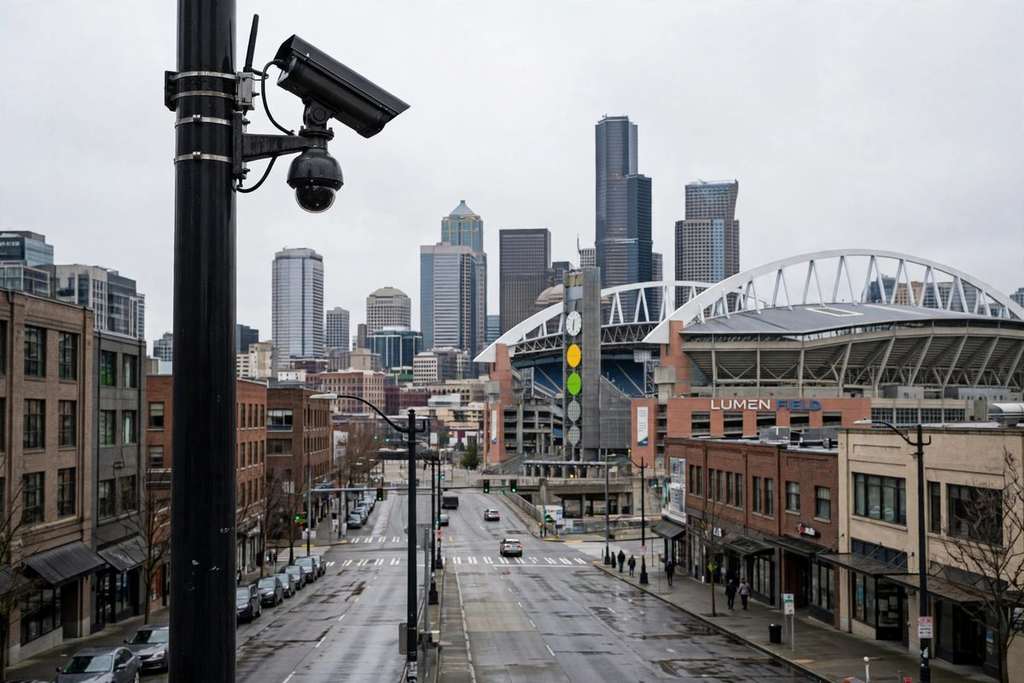
Seattle Mayor Katie Wilson announced on Tuesday that police can expand the city's network of surveillance cameras, ending a pause she ordered in March after community concerns about privacy and civil liberties led her to seek an outside audit. Cameras already installed in the Stadium District will be activated immediately. New cameras will be purchased, installed and activated over the next several months in the Central District, around Garfield High School, and in the Capitol Hill nightlife district, the Mayor's Office said.
The three areas were picked by the Seattle Police Department and approved by the City Council in 2025, before Wilson took office. Wilson, who raised concerns about the expansion during her campaign, paused it in March 2026 and asked researchers at the New York University School of Law Policing Project to audit the Real Time Crime Center, the police unit that runs the camera system.
The audit and the safeguards
The audit was released on Monday, one day before Wilson's announcement. KNKX reported that the researchers found important gaps and shortcomings in the police department's surveillance policy and made 19 recommendations. Wilson said the city plans to adopt most of them.
The promised safeguards include a public dashboard that reports how the Real Time Crime Center is used, and an omnibus surveillance policy covering how the department approves and buys technology. The police department also says it will tighten its rules on permitted uses, who can access footage, how long data is kept, requests from outside agencies and regular internal audits. An advisory group that includes privacy and technology experts, the Community Police Commission, city IT staff and council staff will meet over the next few months to help write policies on private camera integration, use of the center during protests and other First Amendment activity, and where any future cameras could go.
"Seattle does not have to choose between taking crime seriously and taking civil liberties seriously," Wilson said at a Tuesday news conference. She stressed that Seattle's cameras are run by Axon and are not Flock cameras, and she said Axon has a more responsible record. She also acknowledged that risk can never be fully removed. "Risk is often hard to quantify and can never be fully eliminated," she said. "It must be balanced and appropriate and carefully assessed on an ongoing basis."
Support and pushback
Interim Police Chief Andre Sayles backed the decision and promised concrete safeguards, regular auditing, public engagement and notice before any further expansion. Councilmember Bob Kettle, who chairs the council's Public Safety Committee, praised the move and noted that Seattle will still have few cameras compared with cities of a similar size.
Opponents were not persuaded. AJ Randall, a member of the Community Not Cameras Coalition who supported Wilson's campaign, accused the mayor of backsliding. "For me and many people in the community, we feel like this is being jammed down our throats whether or not we want it," Randall told KNKX. Councilmember Alexis Mercedes Rinck said she was glad the audit recommendations will be put in place, but wished the city would get its own house in order first before moving forward with the expansion.
The Mayor's Office said the Stadium District cameras were installed before the World Cup. No date was given for when the Central District and Capitol Hill cameras will be switched on. The Office of Inspector General, which oversees the Real Time Crime Center, said it plans to add periodic, unscheduled spot checks to its audit work in 2027.
Timeline
- 2025The Seattle City Council approves expanding the camera pilot to the Stadium District, the Central District around Garfield High School and the Capitol Hill nightlife district.
- Mar 2026Mayor Katie Wilson pauses the expansion over community concerns and commissions an audit by the NYU Policing Project.
- Nov 9, 2026The NYU Policing Project audit is released. It finds important gaps in police surveillance policy and makes 19 recommendations.
- Nov 10, 2026Wilson announces the expansion will go ahead, with Stadium District cameras activated immediately and the other two areas to follow in the coming months.
Sources
- KNKX: Seattle mayor authorizes police surveillance camera expansion
- City of Seattle, Office of the Mayor: Mayor Wilson Allows Targeted CCTV Expansion While Adopting New Privacy and Accountability Safeguards
- PubliCola: Wilson Says Expanding Police Surveillance System Will Help Make Seattle the Safest Big City in the Country