
Saudi East-West Pipeline Struck in Medina Region, Fire Put Out
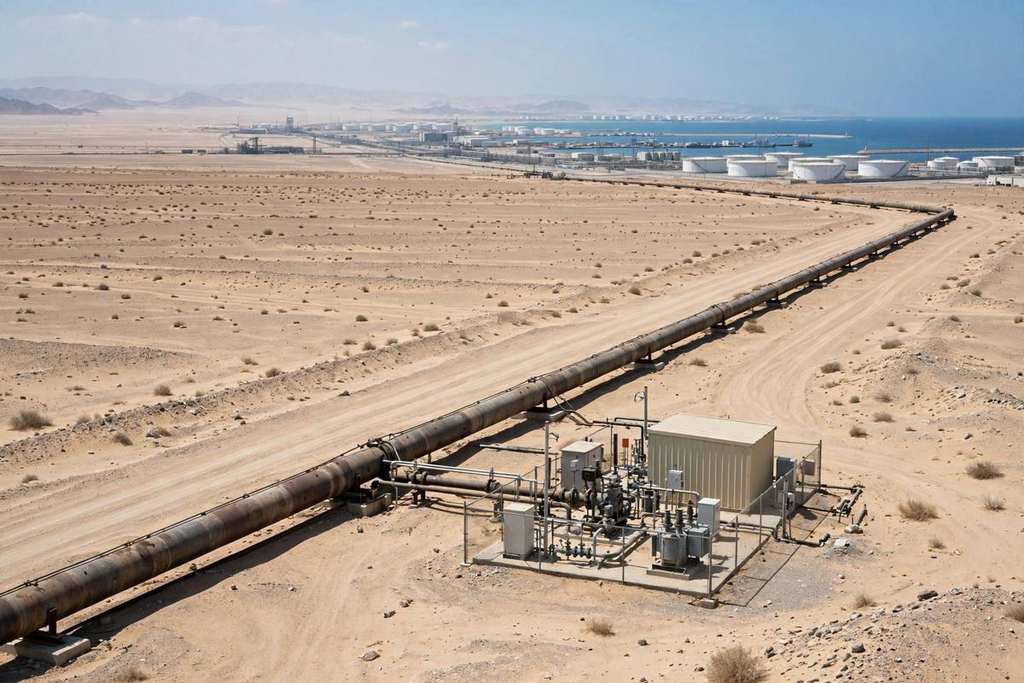
Saudi Arabia said its East-West oil pipeline was struck in the Medina region on Monday, causing a limited fire that was put out, with no casualties and no halt to pipeline operations.
Key points
- Saudi Arabia said on Monday that its East-West oil pipeline was struck in the Medina region, causing a limited fire that was later extinguished.
- The pipeline matters far beyond the kingdom.
- At Yanbu, the pipeline feeds refineries and export terminals on the Red Sea coast.
Saudi Arabia said on Monday that its East-West oil pipeline was struck in the Medina region, causing a limited fire that was later extinguished. The attack caused no casualties and did not affect pipeline operations, the state news agency SPA reported, citing the Energy Ministry.
The pipeline matters far beyond the kingdom. The line runs about 1,200 km (745 miles) from the Abqaiq oil field area in the Eastern Province across the Arabian Peninsula to Yanbu on the Red Sea. Since fighting disrupted oil flows through the Strait of Hormuz, Riyadh has rerouted about 4 million barrels per day of crude through the East-West Pipeline to Yanbu, equal to about 4 percent of global supply, Reuters reported.
At Yanbu, the pipeline feeds refineries and export terminals on the Red Sea coast. That is why a strike in the Medina region, far inland, still draws attention in oil markets: the line has become one of the main routes for Saudi crude to reach buyers without passing through the Strait of Hormuz, and Monday's strike tested it without stopping it.
Missiles intercepted over Riyadh on Tuesday
The pipeline strike was followed by a night of interceptions. The Saudi-led coalition in Yemen said on Tuesday that its air defences destroyed a ballistic missile and a cruise missile fired toward Riyadh, and a separate ballistic missile launched toward the kingdom's southern region. The coalition later said a drone over the oil-rich Eastern Province was also intercepted and destroyed. Saudi Civil Defence had issued an early warning alert for Riyadh before saying the threat had passed. The coalition blamed Yemen's Iran-aligned Houthis for the launches.
What is claimed, and what is not confirmed
Attribution needs care in this story. Saudi Arabia's deputy governor of Riyadh, Prince Mohammed bin Abdulrahman bin Abdulaziz, inspected an Aramco administrative building in the capital that was damaged in an earlier attack, SPA reported early on Tuesday. The Energy Ministry had reported limited damage to the Aramco Tower in the capital's financial district on Sunday, with no injuries, without identifying those responsible. The Houthis claimed responsibility for that attack. Saudi authorities have not publicly identified who struck the pipeline itself, and this article does not treat the pipeline strike and the missile launches as the work of the same party.
The Houthis have stepped up strikes on Saudi infrastructure, including Aramco facilities, in recent weeks. Fighting between the Houthis and the coalition backing Yemen's internationally recognised government intensified after the Houthis advanced in September toward the Bab el-Mandeb Strait, the shipping chokepoint at the other end of the Arabian Peninsula from the Strait of Hormuz.
Timeline
- Nov 9, 2026Saudi Arabia says its East-West oil pipeline was struck in the Medina region, causing a limited fire that was extinguished, with no casualties and operations unaffected.
- Nov 10, 2026The Saudi-led coalition says it intercepted a ballistic missile and a cruise missile fired toward Riyadh, a third missile toward the south, and a drone over the Eastern Province.
Sources
- Reuters: Saudi East-West oil pipeline hit in Medina region, state media reports
- Reuters: Saudi official inspects Aramco Riyadh office after Houthi attack
- Reuters: Saudi-led coalition says it intercepts two Houthi missiles fired towards Riyadh
- SRN News (Reuters): Saudi-led coalition reports Houthi missile, drone interceptions