
North Korea Tests New Air Defence Missile in Fourth Test in a Week
KCNA said the Missile Administration test-fired a newly designed air defence system on Wednesday. South Korea detected multiple missiles from the Sondok area that flew less than 300 kilometres.
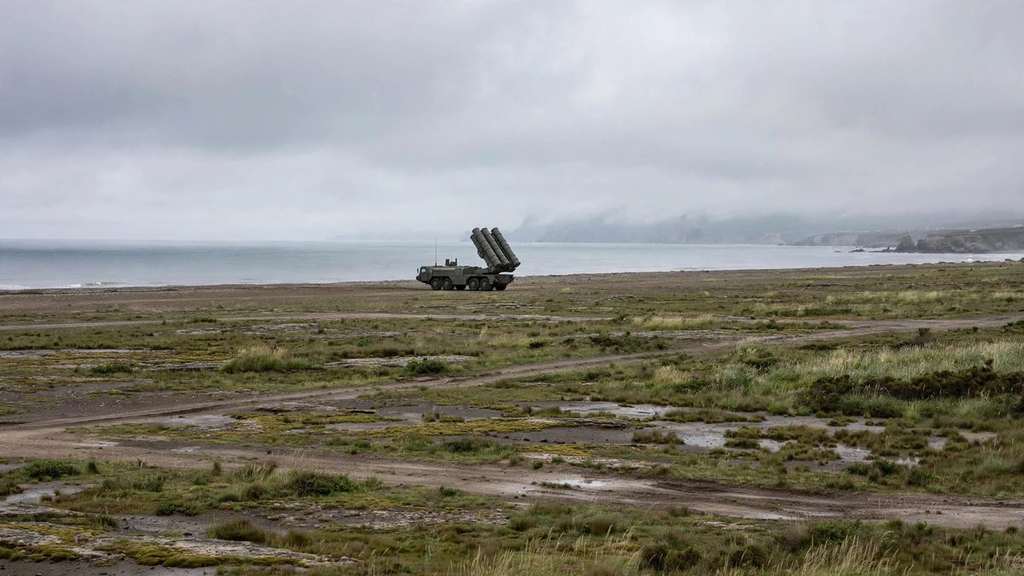
Key points
- North Korea test-fired a newly designed air defence missile system on Wednesday, and state media reported the launch on Thursday.
- KCNA said the Missile Administration ran the test to confirm the technical capabilities of the new system.
- KCNA said the test proved the technical specifications and reliability of the projectile.
North Korea test-fired a newly designed air defence missile system on Wednesday, and state media reported the launch on Thursday. Yonhap called the launch the fourth weapons test by Pyongyang in a week.
KCNA said the Missile Administration ran the test to confirm the technical capabilities of the new system. Kim Jong-sik, a member of the Central Military Commission, oversaw the test, according to KCNA.
KCNA said the test proved the technical specifications and reliability of the projectile. It cited the new material used in the projectile and its intelligent multiple guided mode. KCNA also cited the target identification and tracking capability of the system and its detection information processing device.
KCNA did not disclose the range of the missile. It did not disclose the flight path, the launch location or the target.
On the same day, a firepower subunit of the long-range strategic cruise missile unit in the eastern area held a strike drill. KCNA described the target as a virtual airport. The drill and the air defence test were reported together on Thursday.
South Korea gave a different set of details from its own sensors. The Joint Chiefs of Staff had detected multiple missiles fired toward the East Sea from the Sondok area in South Hamgyong Province early on Wednesday. The projectiles flew less than 300 kilometres.
South Korean officials left open the possibility that the launches included a close-range ballistic missile. A Defence Ministry official said early detection data suggested the missiles could have been several different types.
Why it matters
Air defence systems protect airspace against aircraft and incoming missiles. A new system with improved target identification and tracking would matter for North Korea and for the forces that fly near the Korean Peninsula. KCNA presented the test as proof that the new design works as intended. South Korea presented only what its sensors detected, and it did not confirm the North Korean claims about performance.
The timing also matters. Experts cited by Yonhap said the tests appeared to respond to Freedom Flag, the ongoing joint air exercise held by South Korea and the United States. Weapons tests during a joint exercise send a political signal as well as a technical one.
Analyst Shin Jong-woo of the Korea Defense and Security Forum gave Yonhap a closer reading of the images released by Pyongyang. Shin said the images appeared to show the cruise missile carrying a cluster warhead. Shin also said the new air defence missile appears to have a guidance section that resembles Russia's S-400 surface-to-air missile. The resemblance is an observation from images, not a confirmed statement about the origin of the design.
The context
This test did not stand alone. On November 1, reports covered a cluster bomb warhead test for tactical ballistic missiles. On November 3, reports covered a strategic cruise missile test with a dispersal warhead. The air defence test and the cruise drill on November 4 made the fourth test in a week, according to Yonhap.
The new air defence missile also has a public history. Pyongyang first unveiled the missile in November 2025, according to Shin. KCNA framed this launch as a check of technical capabilities, reliability, guidance, tracking and data processing.
The cruise drill adds a second thread. The unit involved belongs to the long-range strategic cruise missile force in the eastern area. Its stated target in the drill was a virtual airport.
What happens next
Watch for further detection statements from South Korea and further reports from KCNA. Seoul still has open questions about the types of missiles fired on Wednesday. A firmer identification would clarify whether the air defence missile, a close-range ballistic missile, or several types were involved.
Watch Freedom Flag as well. Experts linked the tests to the joint exercise, so further tests during the exercise would fit the pattern described by Yonhap. No source used for this article gave a date for the next test or a formal response from Seoul or Washington. The record so far is a North Korean claim of success, South Korean detection data, and expert analysis of released images.
Key numbers
- 4: weapons tests by North Korea in a week, according to Yonhap
- Less than 300 kilometres: distance the projectiles detected from Sondok flew, according to South Korea
- 2: military activities reported for November 4, an air defence missile test and a cruise missile strike drill
- November 2025: when the new air defence missile was first unveiled, according to analyst Shin Jong-woo
- November 4, 2026: the date of the air defence test and the cruise drill
Timeline
- 2026-11-01A cluster bomb warhead test for tactical ballistic missiles is reported.
- 2026-11-03A strategic cruise missile test with a dispersal warhead is reported.
- 2026-11-04North Korea holds the air defence missile test and the cruise missile drill, and South Korea detects missiles from the Sondok area.
- 2026-11-05KCNA reports the air defence test and the cruise drill.