
Kremlin Warned Germany After Leipzig Airport Attack That It Would Not Be the Last
U.S. intelligence agencies say President Vladimir Putin directly ordered a stepped-up campaign of sabotage against NATO countries, and that the failed drone attack on a cargo plane at Leipzig-Halle Airport in August was one of its opening shots, the Wall Street Journal reported on Wednesday.
Key points
- Updated 16:12 UTC
- Developing story
- BERLIN: A Kremlin official acting as a back channel to the German government warned Berlin after the failed drone attack at Leipzig-Halle Airport in August that the attack would not be the last,…
Updated 16:12 UTC
Developing story
BERLIN: A Kremlin official acting as a back channel to the German government warned Berlin after the failed drone attack at Leipzig-Halle Airport in August that the attack would not be the last, the Wall Street Journal reported on Wednesday, citing officials familiar with the exchange.
U.S. intelligence agencies have concluded that Russian President Vladimir Putin directly ordered a stepped-up campaign of sabotage and covert action against NATO countries, according to European officials briefed on the findings and cited by the Journal. The officials said the Leipzig operation was one of the opening shots in that campaign.
What happened at Leipzig
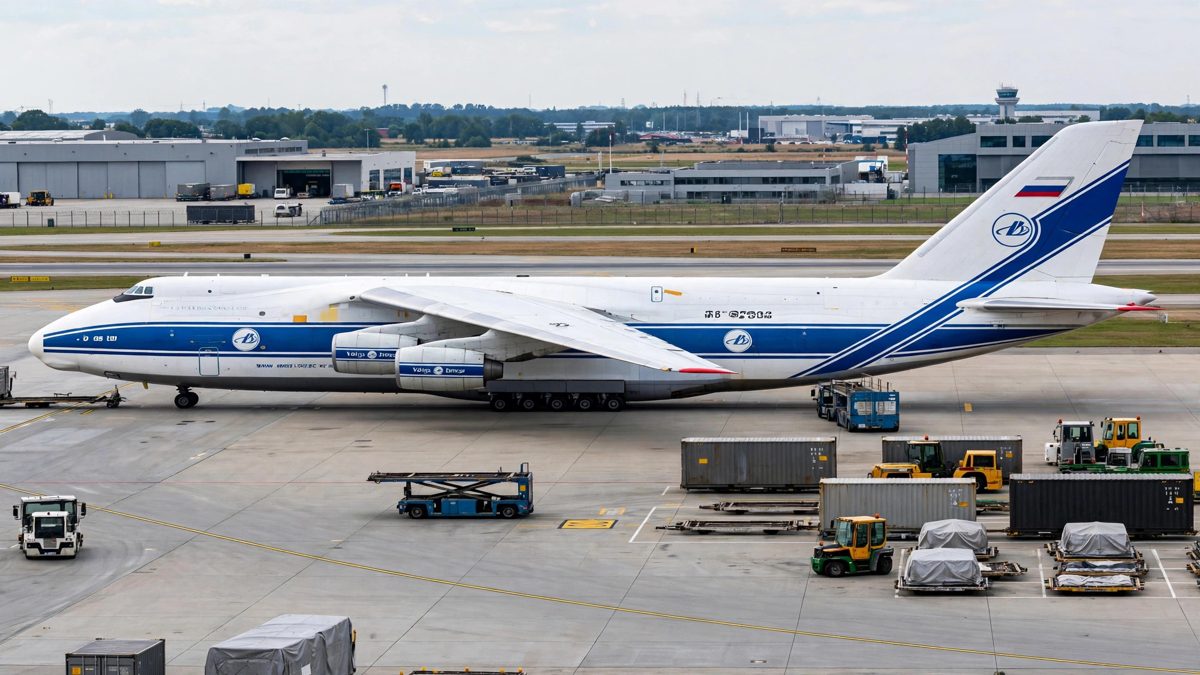
In early August, explosive-packed drones targeted a large Antonov cargo plane parked at Leipzig-Halle Airport in eastern Germany. The freighter was used to carry military assistance to Ukraine. German officials say the drones were piloted by agents of Russian military intelligence.
One drone hit the Antonov but failed to explode. Another collided with a different plane, and a third was found near the airport perimeter. Investigators say a successful attack could have caused deaths and major damage at one of Europe's largest air-cargo airports.
According to the Journal, investigators traced at least three drones loaded with Semtex explosive, controlled remotely through German mobile networks, to servers previously used by Russian military intelligence. Western officials linked the plot to the Special Tasks Service, a branch of Russian military intelligence formed in 2023, and said the ground operation ran through Serbia, where prosecutors have since arrested seven suspects.
Aides to Chancellor Friedrich Merz told the Journal that Germany would have considered invoking Article 5, the NATO collective defence clause, if the attack had caused heavy casualties. Article 5 has been invoked only once, after the attacks of September 11, 2001.
Germany had already blamed Russia
Germany formally blamed Russia for the Leipzig attack on September 1, 2026. Interior Minister Alexander Dobrindt said police work, the pattern of the attack and intelligence findings proved Russian responsibility, and said the drone, its explosives and its detonator matched other Russian hybrid operations. Russia denied involvement and has consistently rejected accusations that it carries out sabotage or hybrid attacks in Europe.
A second drone and a new military warning
The warning from Berlin grew sharper on Wednesday. Reuters reported that an internal German military assessment says Russia has crossed a red line by using weaponised drones, and that Germany now faces a significant sabotage threat. The reassessment followed the discovery in mid-September of a crashed drone carrying high explosives near the Wunstorf air base in Lower Saxony. The drone resembled the one used at Leipzig, but investigators believe this one was aimed at German military aircraft.
A defence ministry spokesperson confirmed the assessment to reporters and said protective measures at military sites were being adjusted site by site, from more guard patrols to infrared cameras and fence surveillance.
Chancellor Merz said on Wednesday that Russian disinformation and hybrid attacks pose the biggest threat to Germany, and that the public still underestimates that threat.
The Journal linked the escalation to frustration in Moscow that fighting in Ukraine and talks with Washington have not forced Kyiv to accept the concessions Putin wants. The Kremlin has not publicly commented on the Journal's account of a direct order from Putin. Its denial of the Leipzig attack stands on the record.
Timeline
- Aug 4, 2026An explosive drone is found near Antonov cargo planes at Leipzig-Halle Airport. Germany later says the attack targeted cargo aircraft there in early August.
- Sep 1, 2026Germany formally blames Russia for the Leipzig attack. Interior Minister Alexander Dobrindt says police work and intelligence findings prove Russian responsibility.
- Mid-September 2026A crashed drone carrying high explosives is found near Wunstorf air base in Lower Saxony, resembling the Leipzig drone.
- Oct 21, 2026The Wall Street Journal reports U.S. intelligence findings that Putin ordered the stepped-up sabotage campaign, and Reuters reports the German military warning of a significant sabotage threat.