
Fed Chair Warsh Lays Out Three Paths for AI: Shared Gains, Job Losses or a Market Letdown
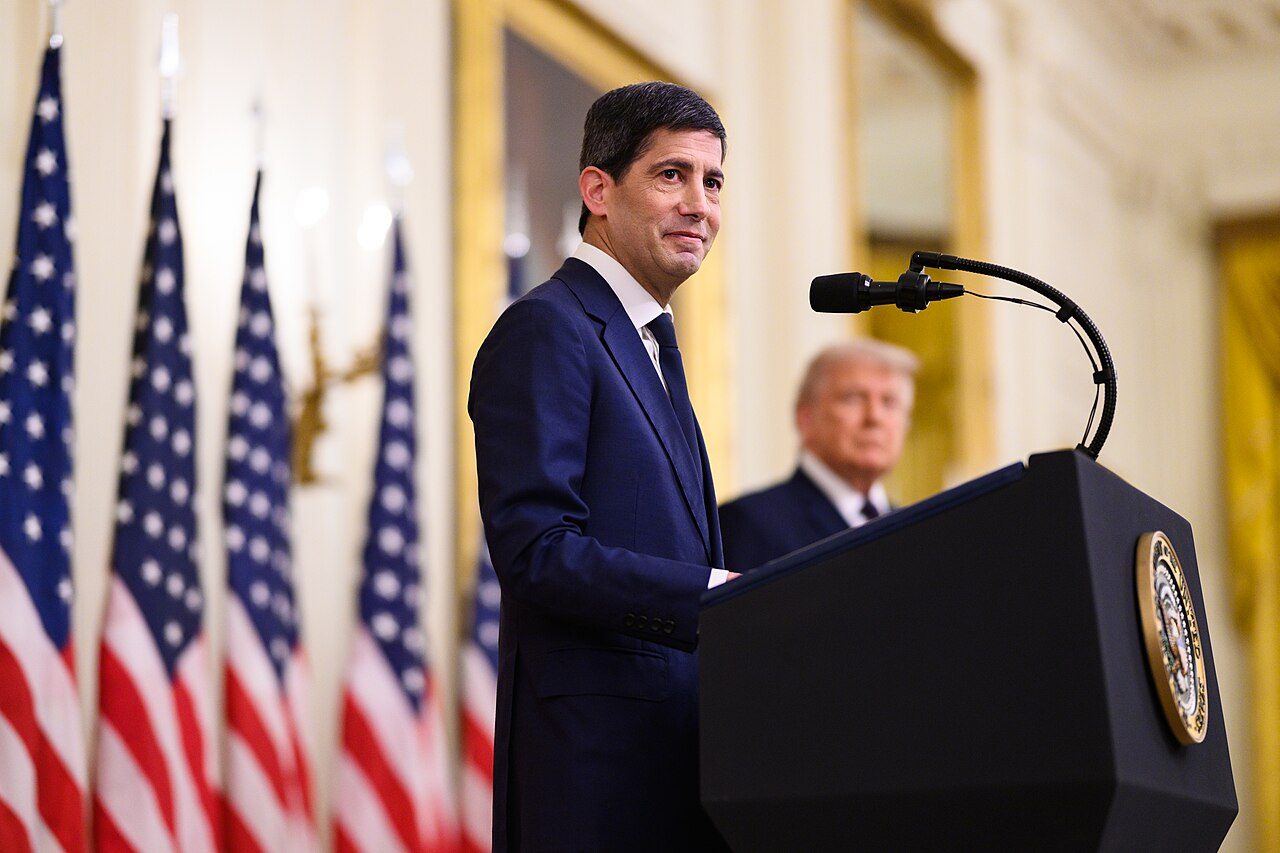
Kevin Warsh opened a Federal Reserve conference in San Francisco with three scenarios for artificial intelligence, and said the central bank must prepare for each one.
Key points
- Federal Reserve Chair Kevin Warsh opened a Federal Reserve conference in San Francisco on Monday with a warning and a choice.
- The conference is the Productivity and Jobs Task Force Conference, hosted jointly by the Board of Governors and the Federal Reserve Bank of San Francisco.
- In the best case Warsh described, the technology raises productivity and the gains reach broadly across labor and the owners of capital.
Federal Reserve Chair Kevin Warsh opened a Federal Reserve conference in San Francisco on Monday with a warning and a choice. Artificial intelligence could lift the United States economy for years, push workers out of jobs even as growth rises, or disappoint after heavy spending and drag markets down. Warsh laid out all three paths in his opening remarks. He said the scenarios were not forecasts.
The conference is the Productivity and Jobs Task Force Conference, hosted jointly by the Board of Governors and the Federal Reserve Bank of San Francisco. Warsh spoke at noon Eastern time on Monday, November 16, 2026. He calls artificial intelligence super intelligence, language preferred by President Donald Trump, and he said it could prove distinct from earlier technologies as a force to supercharge idea generation.
Three scenarios, none of them a forecast
In the best case Warsh described, the technology raises productivity and the gains reach broadly across labor and the owners of capital. Real GDP growth rises persistently above its long-run average, and the United States stays close to full employment. Warsh made clear that is only one of three possibilities.
In the second case, growth accelerates but artificial intelligence replaces workers faster than new work appears. Unemployment rises above full-employment levels while the economy keeps expanding. The gains would then sit unevenly, with workers carrying the cost of a change that still lifts headline growth.
In the third case, the technology disappoints after companies pour money into it. Investment returns fall short of what markets expect, stocks drop, and the economy slows.
"The big questions are about magnitude, scope, and timing," Warsh said.
Risks that could prove costly
Warsh said risks including higher unemployment and the use of artificial intelligence by bad actors could be highly disruptive and economically costly. He said emerging technologies will have a significant impact on the economy.
"Our role in all this is neither advocacy nor opposition. Our responsibility is to recognize that the widespread adoption of this technology will have significant impact on the economy, with important implications for monetary policy down the road," Warsh said.
He added a short line that summed up the task before the central bank: "Our job is to prepare for whatever comes next."
Warsh acknowledged that productivity growth has been reasonably strong in recent quarters but has not experienced a sustained acceleration. A lasting rise in productivity is the test of whether the technology is changing the economy.
No signal on interest rates
The speech carried no direct monetary policy guidance. Warsh did not talk about monetary policy in the speech, and markets got no hint from him about the path of interest rates.
Warsh moderated discussions on Monday with executives from Stripe, Palo Alto Networks and Affirm. He was to close the event moderating a conversation with venture capitalist Marc Andreessen and former Commerce Secretary Gina Raimondo.
The productivity task force is one of five Warsh established in June. It is expected to produce findings for the Federal Open Market Committee by the end of the year.
The conference comes a day before Nvidia reports earnings on Tuesday, November 17.
Timeline
- June 2026Warsh establishes five task forces, including the Productivity and Jobs Task Force.
- November 16, 2026Warsh opens the Productivity and Jobs Task Force Conference in San Francisco and lays out three scenarios for artificial intelligence.
- November 17, 2026Nvidia reports earnings, a day after the conference.
- End of 2026The productivity task force is expected to produce findings for the Federal Open Market Committee.
Sources
- Reuters: Fed's Warsh says emerging technologies will have significant impact, but risks need to be watched
- Reuters via WDSM: Fed's Warsh says emerging technologies will have significant impact, but risks need to be watched
- Barron's: Fed Chair Kevin Warsh on AI and interest rates
- investingLive: Fed's Warsh doesn't talk about monetary policy in a speech on AI
- Federal Reserve Bank of San Francisco: Productivity and Jobs Task Force Conference