
China Economy Falters in October as Factory Output and Retail Sales Miss Forecasts
Industrial output grew 4.8 percent and retail sales rose just 0.4 percent in October, both below forecasts, while fixed asset investment fell 8.1 percent in the first ten months of the year, data from the National Bureau of Statistics showed on Monday.
Key points
- China's industrial output grew 4.8 percent from a year earlier in October, data from the National Bureau of Statistics showed on Monday, November 16.
- Retail sales rose just 0.4 percent year on year in October, below the 0.8 percent increase economists polled by Reuters had expected and down from 1.1 percent in September.
- Fixed asset investment fell 8.1 percent in the January to October period, a wider drop than the 7.2 percent decline recorded in the first nine months and worse than expectations for a 7.0 percent…
China's industrial output grew 4.8 percent from a year earlier in October, data from the National Bureau of Statistics showed on Monday, November 16. The result missed the 5.3 percent growth expected in a Reuters poll of economists and slowed from 5.5 percent in September, which CNBC described as the highest level in five months.
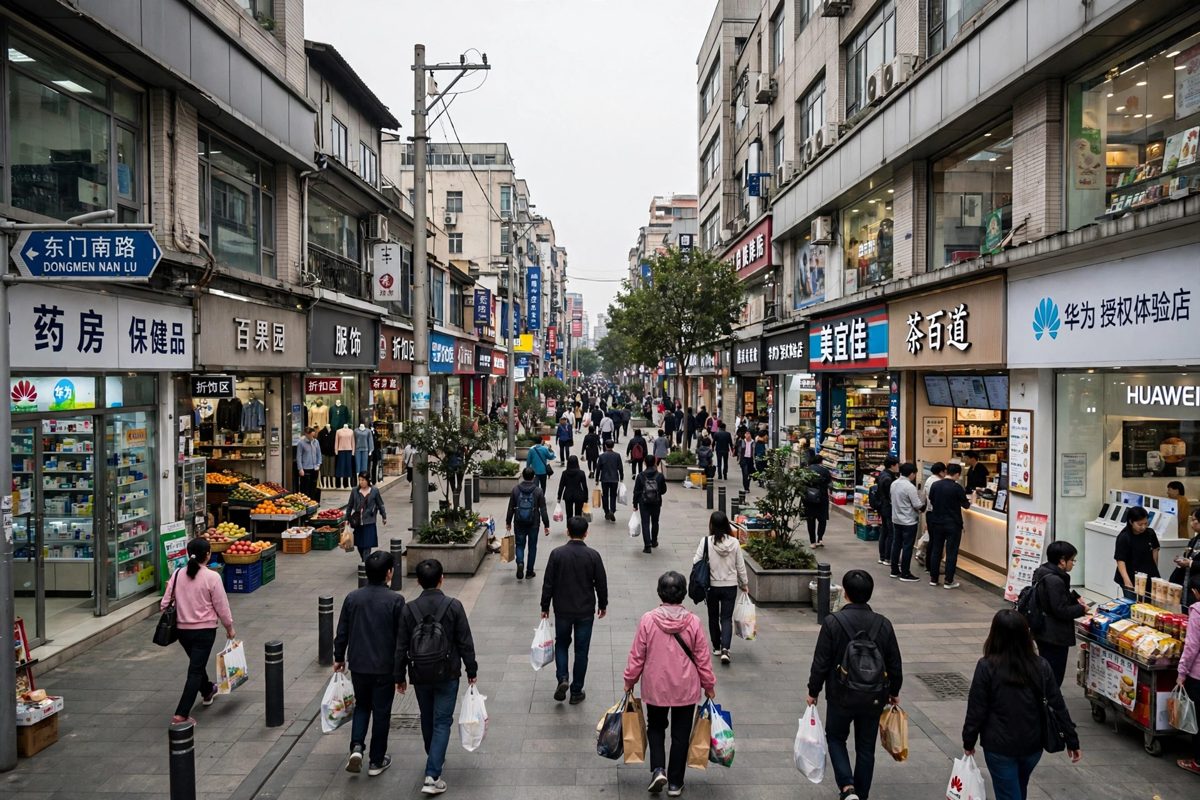
Retail sales rose just 0.4 percent year on year in October, below the 0.8 percent increase economists polled by Reuters had expected and down from 1.1 percent in September. Total retail sales of consumer goods reached 4.6463 trillion yuan in October, up 0.02 percent from the previous month. Households are spending with care, and analysts say weak confidence is the core problem.
Investment falls harder
Fixed asset investment fell 8.1 percent in the January to October period, a wider drop than the 7.2 percent decline recorded in the first nine months and worse than expectations for a 7.0 percent decrease. Fixed asset investment nationwide, excluding rural households, totaled 36.4824 trillion yuan in the first ten months. Real estate development investment fell 21.6 percent over the same period. CNBC described the fall in fixed asset investment, which covers property and infrastructure, as unprecedented outside the Covid-19 period.
Jobs, prices and trade
The surveyed urban unemployment rate dipped to 5.1 percent in October from 5.2 percent in September. CNBC put the jobless rate for people aged 16 to 24, excluding students, at 18 percent in September. Consumer inflation ticked down to 0.7 percent in October. Exports surged 35.2 percent, CNBC reported, and China reached the 1 trillion dollar trade surplus mark by October, the fastest it has ever reached that level.
One part of the economy held up. High-end and intelligent manufacturing contributed to more than half of industrial output growth in the first 10 months, National Bureau of Statistics spokesperson Fu Linghui told a press briefing, Reuters reported.
Analysts see a worrying start to the quarter
Lynn Song, ING chief economist for Greater China, called the October data "a worrying start" to the fourth quarter and said "the domestic economy at large would benefit from more policy support." Song added: "The persistently soft consumer confidence remains the main issue preventing a consumption recovery, and a more effective policy push must address this."
Zhaopeng Xing, senior China strategist at ANZ, said: "No new stimulus measures are expected to be introduced for the remainder of the year." Xing added: "Data for the single month of October are unlikely to alter the overall growth trajectory for the year; we continue to project that annual GDP growth will remain above 4.5%."
Third quarter GDP growth was 4.5 percent year on year, and analysts believe Beijing remains on target to reach 4.5 to 5.0 percent growth this year without significant additional stimulus. Goldman Sachs expects China's economy to slow to 4.6 percent this year, from 5 percent expansion in 2025, before easing further to 4.5 percent in 2027, CNBC reported. Zhiwei Zhang, president and chief economist at Pinpoint Asset Management, warned about the risk from a slowdown in AI capital spending, telling CNBC: "Now the risk has become even more serious."
The October figures leave Beijing with a familiar split. Factories and exports are carrying growth, while shoppers and property are not. The next monthly data will show whether the soft start to the quarter was a pause or the start of a weaker run into the new year.
Timeline
- September 2026Industrial output rose 5.5 percent year on year and retail sales rose 1.1 percent, with surveyed urban unemployment at 5.2 percent.
- October 2026Industrial output growth slowed to 4.8 percent and retail sales rose 0.4 percent, while fixed asset investment for January to October fell 8.1 percent.
- Nov 16, 2026The National Bureau of Statistics published the October data, and analysts said no new stimulus was expected for the rest of the year.