
Bank of Korea Holds Rate at 3.00 Percent After Back to Back Hikes
South Korea central bank paused on Thursday after raising rates in July and August, with inflation still above its 2 percent target and analysts expecting another rise in November.
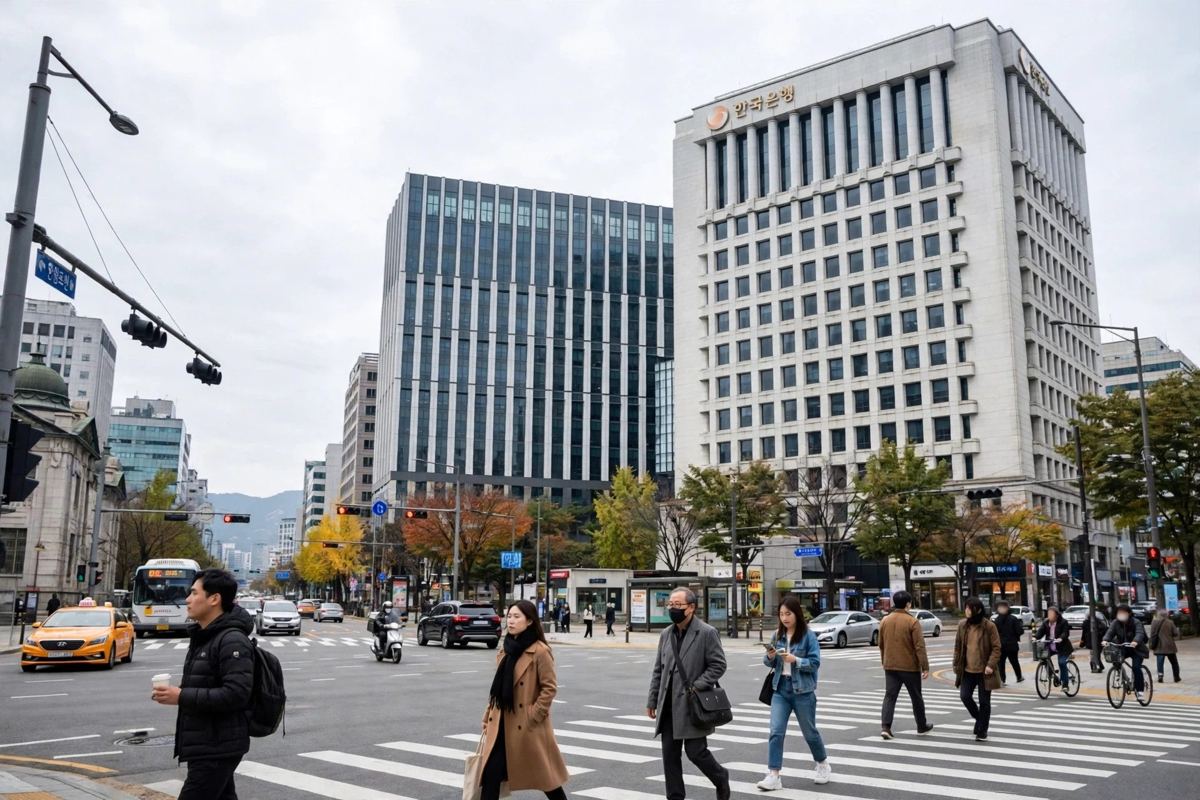
Key points
- The Bank of Korea left its benchmark interest rate unchanged at 3.00 percent on Thursday, Oct 22, 2026, pausing after two straight increases in the summer.
- The hold is the first since May.
- Prices are still rising faster than the bank wants.
The Bank of Korea left its benchmark interest rate unchanged at 3.00 percent on Thursday, Oct 22, 2026, pausing after two straight increases in the summer. The seven member Monetary Policy Board kept the seven day repurchase rate at 3.00 percent, a decision every one of the 34 analysts surveyed by Reuters had forecast.
The hold is the first since May. The central bank raised the rate to 2.75 percent in July and to 3.00 percent in August, after holding it at 2.50 percent for more than a year. Governor Shin Hyun Song was due to explain the decision at a news conference at 0210 GMT.
A pause, not a change of direction
Prices are still rising faster than the bank wants. Headline inflation slowed to 2.9 percent in September from 3.1 percent in August, but it remains above the bank target of 2 percent. Shin said at an International Monetary Fund event on Oct 13 that policy would stay restrictive until inflation moves back to target.
Growth gives the board little reason to ease. Exports are running at a record pace on global spending on artificial intelligence, and shipments from January to September passed 800 billion dollars for the first time. Chip sales are the main driver, and analysts say that strength is starting to reach domestic demand.
November is the next test
The survey median pointed to a rise to 3.25 percent at the November meeting, in line with the bank own dot plot of policymaker projections. A separate survey reported by Korea Economic Daily put the expected peak for this tightening cycle at 3.50 percent.
Analysts at NH Investment and Securities said before the meeting that the board would want time to judge the effect of the two summer increases, and that recent stock market volatility made a third straight rise hard to deliver. All seven economists surveyed by Aju Business Daily also expected a hold, and government bond yields had fallen back to August levels before the decision on softer inflation and a stronger won.
For households and companies, the decision keeps borrowing costs where they were in August. The question for November is whether inflation cools enough to extend the pause, or whether the board follows its own projections and raises again.
How markets read the decision
The decision was also the latest test of the forward guidance system the bank adopted in February 2026, when it began publishing a dot plot of individual policymaker rate projections, modelled on the Federal Reserve. That makes the November meeting easier to read than past cycles: if the projections hold, a rise is the base case, and a second straight hold would need a clear change in the inflation data.
Timeline
- Jul 2026The Bank of Korea raises its base rate to 2.75 percent, its first increase after more than a year at 2.50 percent.
- Aug 2026The bank raises the rate again, to 3.00 percent, a second straight increase.
- Sep 2026Headline inflation slows to 2.9 percent from 3.1 percent in August, still above the 2 percent target.
- Oct 22, 2026The Monetary Policy Board holds the rate at 3.00 percent and pauses to judge the effect of the summer increases.
Sources
- Reuters: Bank of Korea holds rates after back-to-back hikes
- Reuters: South Korea central bank to hold rates on October 22, hike in November
- Seoul Economic Daily: Bank of Korea Holds Base Rate at 3.00%
- Aju Press: Bank of Korea holds base rate steady after summer hikes
- KED Global: BOK stands pat in October following back-to-back policy rate hikes