
Cyberattack on Refrigeration Supplier Hits French Blood Bank Cold Rooms, No Plasma Lost
Attackers changed cold room settings at three French Blood Establishment sites through a refrigeration provider. Alarms caught the change, staff secured the plasma, and the blood service said no products were lost and no health effects were found.
Key points
- A cyberattack on a refrigeration equipment provider changed operating settings in cold rooms at three cold-storage sites of the French Blood Establishment, the EFS, the country's only civilian…
- The EFS said temperature and defrosting thresholds were raised to extremely high levels on Monday at the three sites.
- Monitoring and alarm systems quickly detected the anomalies.
A cyberattack on a refrigeration equipment provider changed operating settings in cold rooms at three cold-storage sites of the French Blood Establishment, the EFS, the country's only civilian blood collection and transfusion organization. The EFS said it was not directly targeted.
The EFS said temperature and defrosting thresholds were raised to extremely high levels on Monday at the three sites. The French weekly Le Canard Enchaine, which first reported the attack, said the temperature usually set to minus 30 Celsius, minus 22 Fahrenheit, was raised to a reported setting of 110 Celsius, 230 Fahrenheit. That figure is the reported threshold setting, not a measured freezer temperature.
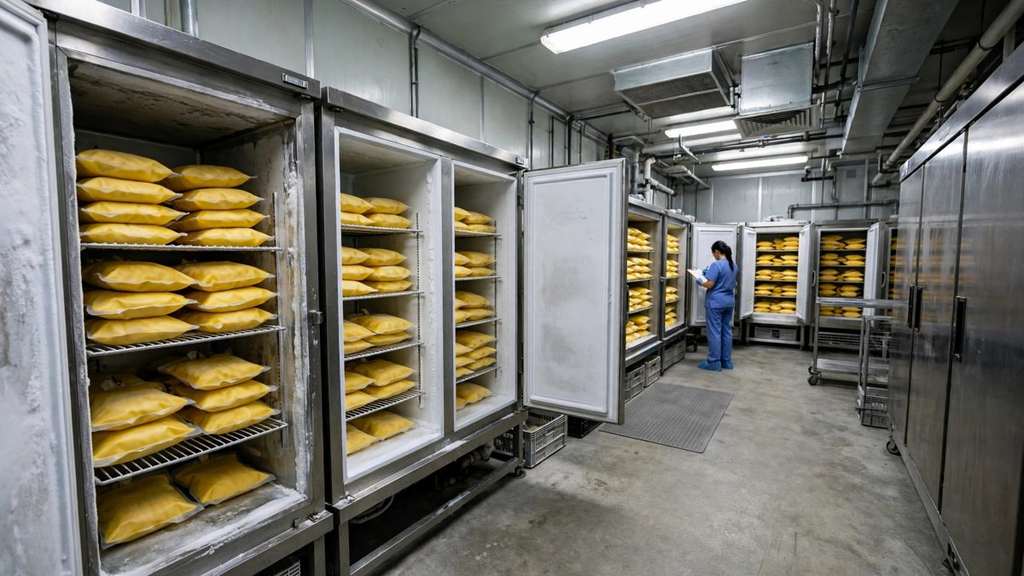
Monitoring and alarm systems quickly detected the anomalies. Staff took action, and products were transferred or secured. The EFS said no blood products or samples were compromised.
"No health consequences have been identified, and no blood products were lost," the EFS said in its statement.
Plasma for transfusions and medicines
The stored products were bags of plasma intended for transfusions and plasma used to manufacture medicines. EFS cold rooms supply blood and plasma to some 1,900 healthcare facilities across France, according to Help Net Security reporting of EFS material. The EFS said blood collection and distribution operations remain uninterrupted.
The EFS stated: "Although the EFS was not directly targeted by this cybersecurity incident, anomalies were reported, resulting in changes to the operating parameters of cold rooms equipped with the provider's solution. Specifically, temperature and defrost thresholds were set to very high temperatures."
The refrigeration equipment supplier was named as Coolworld in multiple reports. Coolworld said it is aware of the incident. It said the vulnerability being reported relates to a component from a third-party supplier and was outside Coolworld's direct control. It said only a limited number of units were affected and that it was taking appropriate measures.
Coolworld stated: "The vulnerability currently being reported in the media relates to a component from a third-party supplier and was outside Coolworld's direct control."
Part of a wider refrigeration attack wave
EFS technical teams are working with ANSSI, France's national cybersecurity agency, and the Health Ministry. The investigation is under way. Monitoring of equipment operation and temperatures has been stepped up.
The blood bank incident is part of a wider wave of refrigeration attacks in Europe. The Associated Press reported that supermarkets in a number of European countries said this week that fridges and freezers were remotely taken over and warmed up, spoiling tons of food at a total cost of millions of euros. Help Net Security listed initial supermarket reports in Belgium, Luxembourg, Sweden, Finland, Ireland, Estonia and the Netherlands, with some stores in Portugal and Romania also targeted. It also noted a similar episode in mid-October across France, Belgium and the Netherlands.
It is still unknown who is behind the attacks, according to the reports.
Timeline
- Nov 2, 2026An attack at the refrigeration provider changes cold room parameters at three EFS sites on Monday. Alarms detect the anomalies and staff secure the products.
- Nov 3, 2026The EFS releases its statement late Tuesday, saying it was not directly targeted and that no blood products were lost.
- Nov 4, 2026The Associated Press and Help Net Security report the incident. EFS teams work with ANSSI and the Health Ministry as the investigation continues.