
House Democrats Nominate Jeffries for Speaker, 251 to 11
Hakeem Jeffries won the closed-door caucus vote on Wednesday and now needs 218 votes on the House floor on January 3 to become the first Black speaker in US history.
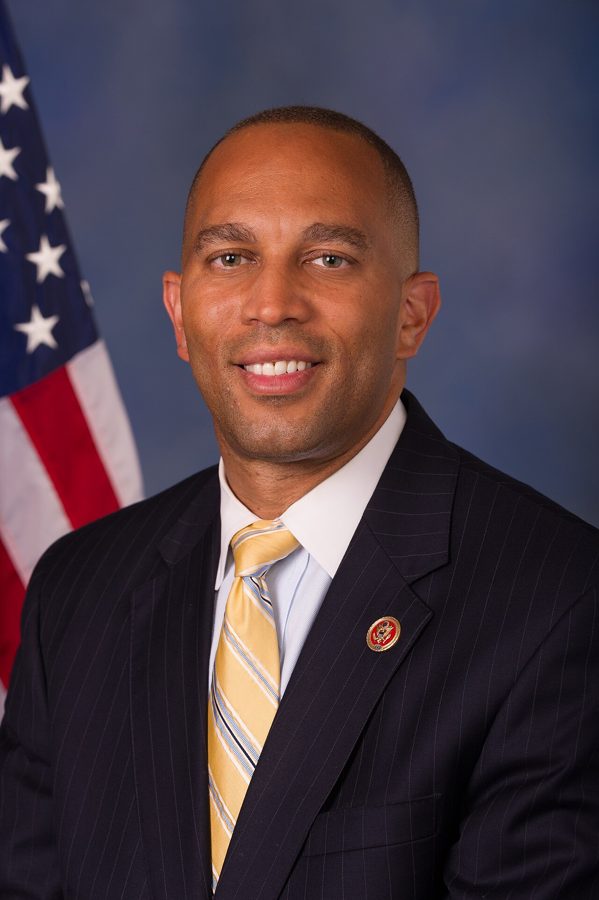
Key points
- House Democrats chose Hakeem Jeffries as their nominee for speaker on Wednesday, voting 251 to 11 in a closed-door caucus ballot that puts the New York lawmaker one floor vote away from becoming…
- The vote took place Wednesday morning in Washington, two weeks after Democrats won control of the House in the November 3 midterm elections.
- The nomination does not hand Jeffries the gavel.
House Democrats chose Hakeem Jeffries as their nominee for speaker on Wednesday, voting 251 to 11 in a closed-door caucus ballot that puts the New York lawmaker one floor vote away from becoming the first Black speaker in US history.
The vote took place Wednesday morning in Washington, two weeks after Democrats won control of the House in the November 3 midterm elections. Jeffries ran unopposed. He needed only a simple majority of his caucus to take the nomination, and he cleared it by a wide margin, with 251 yes votes out of 262 ballots cast.
One vote left
The nomination does not hand Jeffries the gavel. The full House elects the speaker when the new Congress convenes on January 3, 2027, and the winner needs 218 votes on the floor. Democrats are projected to hold at least 257 seats in the new Congress, so Jeffries can lose close to 40 of his own members and still reach 218. His expected opponent is Rep. Jim Jordan of Ohio, whom House Republicans nominated last week to lead their conference in January after Speaker Mike Johnson stepped aside from the race.
The speaker is second in line to the presidency, behind the vice president. No Black lawmaker has held the post in the 237 years since the first Congress met.
How he got here
Jeffries, 56, has led House Democrats since 2023, when he took over from Nancy Pelosi. He launched his bid for speaker on November 5, two days after the midterms, vowing an affordability agenda. In the days before the caucus vote he worked to hold together a caucus that spans progressives and moderates, and the day before the ballot he publicly backed a broad expansion of Medicare eligibility and universal coverage for children, positions that pleased the party's left wing.
The 251 to 11 tally was stronger than the one Pelosi posted the last time Democrats took back the House. In 2018 she won her caucus nomination 203 to 32. Jeffries had the option of being nominated by acclamation, with no count taken. He chose a recorded yes or no ballot instead, following the 2018 approach, so the size of his support is now on the record.
The rest of the team
Democrats are filling the rest of their leadership slate in the same round of meetings. Rep. Katherine Clark of Massachusetts is running for majority leader, Rep. Pete Aguilar of California for majority whip, Rep. Joe Neguse of Colorado for assistant speaker and Rep. Ted Lieu of California for caucus chair. All four are running unopposed.
Jeffries has said his first 100 days would focus on affordability and accountability, the two themes Democrats ran on in the midterms. The formal test comes on January 3, when all 435 members vote on the House floor and Jeffries either makes history or falls short in public.
Timeline
- Nov 3, 2026Democrats win control of the House in the midterm elections.
- Nov 5, 2026Hakeem Jeffries launches his bid for speaker.
- Nov 18, 2026House Democrats nominate Jeffries for speaker, 251 to 11, in a closed-door caucus vote.
- Jan 3, 2027The full House votes for speaker as the new Congress convenes. The winner needs 218 votes.